An Interview with a Legacy Leader: John Carmichael, CEO of GT Independence
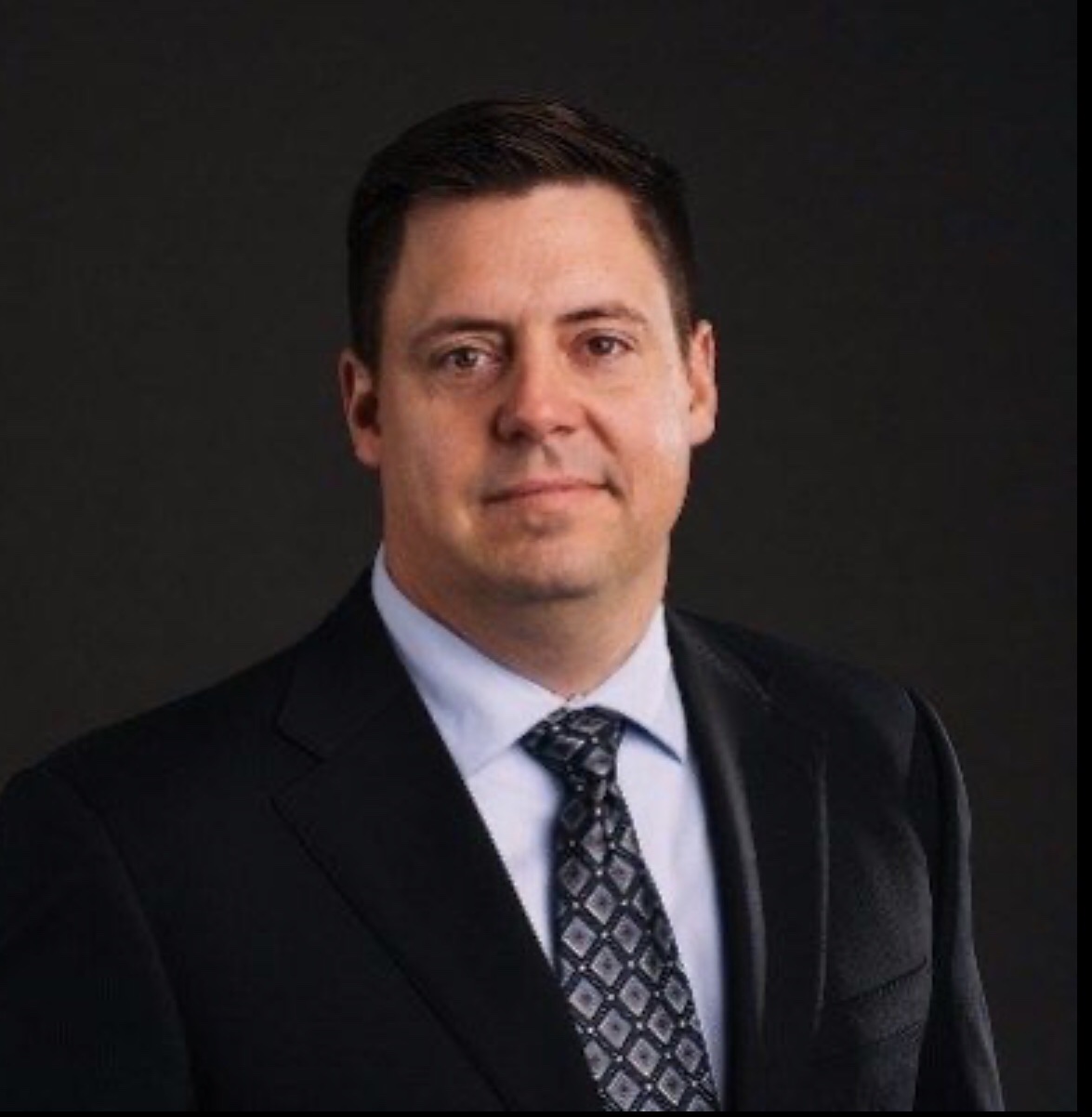
One of the great rewards of being a consultant is having the opportunity to engage with many amazing people. Five or six years ago I had the chance to do a little work with leaders from GT Independence. At that time John Carmichael was a rising leader in the company and then circumstances resulted in a fairly sudden elevation into the CEO role. Since his ascendance into that role, GT Independence has thrived, evolved, and become a leader in their industry. The intentional culture and attention to values and principles has led me to the conclusion that John is a Legacy Leader.
What has John Carmichael done that caused me to tap him as a true Legacy Leader? To make sure I fully understood his actions, I decided to ask him a series of questions. What follows is an abbreviated version of that conversation. If you want to hear the entire conversation, we will be posting it as a podcast on the Culture By Choice website. So, without further explanation, here’s what we discovered through our conversation.
Jay: Hi John, thanks for joining me today for this interview. To help everyone put this conversation into the proper context, can you tell me what it is that GT Independence does?
John: we continue to grow. We’ve reached the end of a plateau. We have to do some painful growth things to get to the next plateau. We want to become a national leader in our industry. This has caused us to have to re-organize our leadership. We’ve grown from 270 employees to 350 employees in just the last few months. We grew 17% in October alone. So to begin with GT Independence is a growth company.
More specifically in the United States, Medicaid is the insurance program that serves people with disabilities or low income. These people rely on Medicaid to meet a number of their needs. What GT Independence does is assist those individuals that need long-term care services, get that care while remaining independent and not have to resort to using nursing homes. GT Independence contracts with state Medicaid programs to help people hire their own in-home support providers. We act as the payroll agent for these individual Medicaid recipients. We serve as these individual’s HR Office. They become the employer. They get their own tax ID and they select, hire, manage, fire and pay their own providers and we do all the payroll, compliance reporting to Medicaid and keep track of everything and make sure the program is running smoothly.
What happens as a result of what we do is the client has control of who comes through their front door, instead of some 3rd party agency sending somebody you’ve never met before. You’ll get much more control over how your critical supports are delivered. This results in getting much better outcomes. The Robert Wood Johnson foundation did a very detailed study of this about 20 years ago. What they discovered is that the incidence of unmet needs, incidence of caregiver stress, and incidence of negative medical events such as falls and other accidents, is greatly reduced when individuals are in charge of their own care supports.
Jay: I recognize you as someone who is trying to create a lasting legacy that is not dependent on you but on the values of the company. I think you have a great personality. I think you’re a great young man. But, I know that with this company it’s not all about you, it’s about what the company does. What would you say are the key values and principles that this company operates from?
John: Sure I’d be happy to share that and I think that to be a truly successful leader you have to operate from the basis of values and have to be able to share a vision with your team and help them understand how they can achieve this common vision. If it’s about you, then there’s something wrong. At GT Independence, there is a very clear mission and values we talk about. The mission at GT Independence is to help people live a life of their choosing. At GT Independence we talk about the values of integrity, communication, excellence, professionalism, and respect. We have specific definitions of what these terms mean to us at GT Independence. But overall we have an over arching value of self determination. At GT Independence we use this term to mean “people who need supports still have as much control and say over their services as possible.” That’s the one overriding principle. As the leader of the company I’m charged with fortifying and upholding this principle. This, as a CEO, is the number one job I have.
Jay: How do those corporate values align with your own personal values?
That’s a good question and it’s very interesting. The process we used to come up with these values was a personal introspective process that we used among the leaders of the company. We tried to talk about what we aspired to be for ourselves just personally, and how we might communicate those aspirations to the rest of the company. And we thought very carefully about that and we designed those values based on our own personal definition of those values. So those company values are very closely aligned with our own personal values. And our company, which may be different from a lot of other companies, we use very simple, straight forward terms to define our values. Other companies may get a little more detailed in what their values mean, our values are the kind of values that people learn in kindergarten.
I think our values are essential and important to the company. Another thing I would say is that values can be defined by the leadership and should be, but a company’s culture is discovered. You have to constantly test the culture to see if the values are alive and well in all levels of the company. You have to get feedback and your people have to know you are listening and reacting to that feedback. We all aspire to these values and we do our best to live up to them every day. They are the kind of thing that has to be worked on every day.
Jay: You’ve basically answered my third question which was how do you see these values and principles lived out by the employees in your organization and how you communicate those values to the rank-and-file of the organization? Is there anything additional that you do to make sure everybody understands or to make sure you know that people are aligned and fitting in to the organization?
John: yes, it’s a focus of ours. One of the things the company recently did, was developed an entire new department called the talent department. We’ve separated out some of the duties that the HR department had into a department that focuses on workplace and culture. It’s takes in the areas of leadership, coaching, employee engagement and it really focuses on those. One of the things that is really critical is to test employee engagement. This is how you know if your values are really alive. So we conduct regular employee engagement surveys but we also interview employees. And the questions we ask are about how they view their role? And what elements of employee engagement are present? Or maybe where do we have gaps in employee engagement? And then we take that feedback and institute changes to the culture. We’ve clarified our communication guidelines so that we know what the rules are for communicating with one another. When do you have to return an email? What should you do about those communications and various tactics that help to reinforce our values? Another thing is our quarterly ask the CEO anything webinar. All our employees will log on next Wednesday at 2 PM to ask me any question they want to ask me. Just ask anything and I’ll provide an answer and the whole company participates in that. So those types of things are ways we enforce and grow our values.
Jay: On of the things that happens when you start operating a company based on values and principles, is something we refer to as a controlling idea. And when you were talking about self-determination I kind of got the sense that, that would be your controlling idea. And the controlling idea to me, the way we use it in our company, Culture By Choice, it is that underlying principle that every decision you make, it has to be true to that or you don’t make that decision. You don’t go that direction. We’ve noticed with our own company, that the times when we get into trouble, is when we forget what her controlling idea is supposed to be. So when you do all of that and you have to make all those decisions, especially personnel decisions, like whether you’re going to hire somebody or somebody is going to get a promotion or somebody is going to get positive performance review, whatever it is, those values color what you do so you come up with a set of absolutes you say everybody must do these things and you come up with the opposite side that says nobody is allowed to do these things. Has that been formally stated or is that something that everybody just understands? Do they understand that you must do these things and you better not do those things?
John: yes yes that absolutely has. When you talk about a controlling idea it certainly is the right to self-direction or self-determination. It definitely is the controlling idea a GT independence. We have some promises that we make. Our values sort of come together to form these promises. So one of the promises that is big for the company is that we bring our values to the table. And so, I was pleased win one of our new operation managers, who has just been with the company fairly recently, and was working with one of our new contracts, and came to a decision point when the payer, this Medicaid program payer, asked them to do something that was completely not in line with the idea of self determination. And would have constricted the rights of the individuals we were serving, to fully be able to make their their choices about their own support arrangement. The manager, without consulting anyone at the company, responded firmly to the payer, “no that wouldn’t be in line with our approach to self determination and maybe we could find and consider a different option that would be more in line.” Without having to receive any supervision on the subject and a person who is pretty new to the company, applied our values to a situation and made a decision. And that is so powerful as the leader of this company when you can communicate your values in such a way where people just know what to do and know how they are supposed to behave so yes absolutely Jay self-determination first and foremost and I feel like on the whole we’re doing a pretty good job of communicating that ethic.
Jay: that’s a great example and for somebody so new to the company it tells you that something is happening at GT Independence where people pick up on this value laden culture very, very quickly. One of the other aspects of the culture of any company is between those absolutes,you absolutely must do this and you absolutely cannot do that, there’s a whole range of things that you just tolerate and things that are acceptable and then there’s the barely tolerable and the very acceptable. And with the performance reviews of people, what we are trying to do is get them to move away from the barely tolerable and move them towards the more acceptable behaviors. You can’t have a rule for absolutely every behavior. If that happens within an organization you would end up with with a rules list that would become unwieldy. But, as you take a look at the people who work for GT Independence and you look at their behavior and performance, how do you go about helping them move from the barely tolerable behavior to the more highly acceptable behaviors?
John: that’s a great question and it’s something we’ve explored quite a bit lately. There are a few concepts that we are trying to employ with our leadership team now. Because as I mentioned earlier, the company is trying to expand, to be a national leader, and we’ve had to change our structure and what that does is introduce more complexity to the problem of leadership and it introduces more specialization among the people who are working at the company. So, the role of a leader at GT Independence is kind of changing. The focus needs to be more on coaching rather than managing. For me, the difference between coaching and managing is kind of like painting a picture rather than giving instructions. So, if I have an employee who is just engaging in the tolerable behaviors, what I want to do for them is paint the picture of what superior behavior looks like. Show them, give them an example that will allow them to visualize what a top performer looks like, what the top performers are doing. Give them a vision of what the ideal is. Through that, they can explore for themselves how they might change their behavior. And it’s done in a way that allows people to focus on their strengths rather than their weaknesses and allows them to own their own performance. So if we can get to that kind of leadership at our company then I think we can do a better job at moving the needle towards superior behavior.
Jay: that’s a very good point and that leads me to ask, you as you see this and you see this potential for growth and people are adopting a growth versus a fixed mindset, they’re thinking in terms of how do I continuously get better. That entails setting some specific goals for myself, how do you go about helping people set really important goals for their own improvement? And in light of those personal goals, you’re going to have organizational goals as well. How do you keep those individual goals in line with the organizational goals? That is often a difficult balancing point for companies.
John: it is and the problem is exacerbated because we grow and we grow a lot. We have 20 to 30% growth each year. Things break awfully fast here at GT Independence, and the temptation is to react to things that come down the road, and what that ends up doing is it removes your focus from the goals that you’ve started. So we have a vision, we want to be a national leader in financial management services, so we have some metrics we use. We have some KPI‘s that help us determine if we are meeting that vision.What we’ve done is take that vision apart and broken it down into small pieces, so that we know if we want to be here in 10 years we have to do this next week. And that process, developing that vision, identifying the components, the tactical components, that will get you to that vision are key to our strategic planning process. Then we hold leaders individually accountable for their contribution to those pieces and we put KPI‘s on that. One of the things that is incredibly powerful, when you talk about accountability, and I think the word accountability is really important and when you say the word accountability you envision someone scolding somebody for not getting their job done. But that’s not what we really mean when we say accountability. It involves counting. It involves measuring your performance against what you said your performance would be. A big part of what we do is measure. We measure our progress towards our goals. And I think that allows us to stay disciplined on our goals. Another tool that we use is a job score card. Each individual is responsible for goals on their jobs scorecard. So they will have a couple maybe three or four KPI’s that measure their progress towards their goals as we continue to measure their performance. And we also, on the job scorecard, are going to write down an individual’s expected capacities. So for example, a person who has a sales role might need to have very strong networking competencies. And so we are going to describe for them what those very strong networking competencies are and we’re going to allow that person to identify where there might be gaps or strengths in their competencies, and help them make a plan to address those or to optimize their own competencies. So KPI’s and jobs score cards are great tools for us.
Jay: And I like what you what you’re saying that accountability is not a club you are using. Accountability is a way to help people achieve what they have already said they were going to achieve. That is, we just so often hear that the accountability piece is used as a punishment. We’re going to hold you accountable for what happened. No, the horses already out of the barn, if your goal is to close the door before the horse gets out we’re going to measure you on whether or not you were timely and getting the door closed.
John: Jay, I think a great definition of accountability is, do you know whether you are winning or not? If you can point to a set of numbers that say you are winning then you are accountable. It’s a much better definition then I’m going to hit you with a club if you don’t get things done.
Jay: Wow, this has really been great. There are a couple more questions just just quick little things. No organization can stay operating unless they have adequate revenue flow to keep them above water. And hopefully, if you are a for-profit company you’re going to be profitable. One of the arguments I hear from people is yeah we’d be values driven but we’ve got to make money. You know the quarterly P&L has to show we are making a profit. How do you deal with that? I know part of it is that you don’t have a board of directors that you have to answer to, to prove profits to on a weekly basis. But, how do you make sure you make a profit and still stay true to all those values?
John: there’s a couple of things. I don’t have a board of directors but there are people who own the company, investors and stakeholders, who do expect to see earnings. So the pressure is there to have earnings. The paradigm is that I can’t be values driven because I have to have earnings. My paradigm is, I have to have earnings so I better be values driven. I think that, and we see it in Wall Street, this intense focus on earnings and it’s not just earnings but short term earnings, so I have to be profitable this quarter. If I don’t make my numbers this quarter I’m in trouble. I think if company leaders would focus on delivering value and doing the right things the earnings are a byproduct of that. And that’s been my experience. So, if you take away the unnatural fear of not making earnings in any one quarter, and you just focus on adding value you can see that your earnings will be there. Another thing that is key for us is making sure that you are delivering a total solution and making sure you are optimizing margining that way. If you own 7% of any market you’re doing, probably, pretty well. I really believe that earnings come from margin and that should be focused on more than volume. Make sure you’re delivering the total solution. For example, at GT independence we enroll people face to face, rather than sending them a packet of forms to fill out. And at GT independence we’ve developed our own time keeping mobile application that flows right into our portal. That was a big investment, we are under took the expense to do those things but were able to command a premium in our marketplace because nobody would even dream of going somewhere else for their services. Because, we’re solving the whole problem. So, that’s been a huge way to drive earnings and it’s convenient because it lines up with our values. By removing the roadblocks to self determination, bringing our values to the table, getting people paid, these are the things that we are focused on and they have led to earnings because of their value.
Jay: Wow, this has been very enlightening I appreciate the time you’ve taken out of your very busy schedule to talk with me. Is there anything else you’d like to offer that would give us more insight into how you’ve helped to create this legacy culture at GT Independence?
John: First of all, I’ve loved participating in this interview. Every CEO loves to spout on about their theories and approach. I think when you look to the future, one of the big challenges companies have is attracting and retaining talent and we have to understand that there is a new generation in the workforce. Millennials and that generation after the millennials, what we know about these generations is they’re not willing to sacrifice purpose for money. So if you’re going to attract the best talent in the future you’re going to have to bring people and give them a purpose. Help them feel connected. Help them feel like they are making a contribution. That’s going to be the key to any business success anymore. No longer can we focus on the interests of the owners of the company and have everybody’s role be to drive profitability for the owner of the company. We have to do more for our stakeholders, including our communities, our workers, the industry that we work in, and yes the owners of the company. I think if we take that mindset, the entrepreneurs and the business leaders of this country can solve a lot of the countries problems. I look forward to continuing to be oart of that.
Jay: Thank you so much John I really appreciate it and good luck as you guys continue to grow.
John: Thanks Jay.

 Cheryl Lohner
 drjbnewman
 Newman’s Legacy Leadership Blog