Jay Newman, PhD, Founding Partner Culture By Choice
In most athletic endeavors, stretching is a good idea. Stretching keeps our muscles limber and flexible and this helps prevent injury. Some athletes forego stretching and often pay the price for that oversight. The lack of suppleness and flexibility can result in torn tendons, ligaments, and muscles. These injuries are frequently more difficult to recover from than are broken bones.
Our business endeavors have an analogous experience. If we do not stretch our thinking, talent, and growth frameworks, we also run the risk of suffering a professional injury. Similar to tendon, ligament, and muscle injuries, these professional injuries can be difficult to recover from. As is the case with athletes, the best course of action is preventative stretching. Before there is a chance for a catastrophic injury, the Legacy Leaders stretch themselves to make sure their thinking, talent, and growth frameworks can withstand the stress and rigors of the business world.
In athletics, you learn to stretch muscle groups and the tendons and ligaments associated with each of those groups. In the world of business, leaders must learn to stretch their thinking about, what is done, how things are done, and who should be doing those things. Being inflexible in these areas can create limitations for your business. We’ve seen too many businesses lose wonderful opportunities because they lacked the flexibility needed to take full advantage of those opportunities.
Legacy Leaders must also stretch their talent. In this we mean not only their personal talents but the talents of everyone in the organization. And, sometimes that means engaging talent from outside of the organization. Limiting the business to only the talent the leader sees on hand is also limiting the business opportunities. As leaders, we often see only what we’ve always seen and we fail to realize talent that is right before our eyes. Legacy Leaders know to ask members of the organization “who has the ability to do what needs to be done?” Some people will suggest colleagues who they know have talents that others are unaware of. Others may volunteer themselves, knowing they have talents and skills that have not been tapped yet. In either of these cases, Legacy Leaders will follow these suggestions with conversations about how comfortable those individuals are with taking on these new responsibilities and they will make sure those people have the support they need to succeed.
Some businesses also make the mistake of failing to stretch their growth and development muscles. Some people naturally want to learn new things but others are comfortable just staying the way they are. If the world around us was unchanging, perhaps it would be okay to forget stretching in this area but the world is changing and it’s changing fast. Failure to stretch our growth and development muscles creates a closed mindset. A closed mindset sets the stage for disaster faster than any other inflexibility. For it is the closed mindset that tricks us into believing that every thing is alright when the next quick move can cause the career ending injury.
So, how do we go about stretching? The first thing we need to realize is that stretching will take us out of our comfort zone. But just like stretching our muscles, tendons, and ligaments, we must stretch carefully. If we try to stretch everything to the maximum too soon, we will cause the very injury we are trying to prevent. Legacy Leaders know that we have to stretch a little bit today and just a little bit more tomorrow. We have to keep increasing how much we stretch every day until we’ve reached the desired level of flexibility. And, then we have to ask the question, “is this far enough? Can we stretch further? What might happen if we do? What might happen if we don’t?”
Jay Newman PhD, Founding Partner Culture By Choice
An idea that I picked up from my good friend Zeke Lopez is that business, and any organization for that matter, is all about energy. Money is nothing more than a representation of energy. From man’s earliest social and commercial endeavors, the goal has always been to acquire, conserve, and protect the energy needed to survive. Without energy life is impossible.
It is said that people have some fundamental needs; food, clothing, and shelter are usually mentioned as the top three of these needs. Each of these needs is tied to energy. Food is our source of energy. Clothing helps us conserve our energy. And our shelter helps us protect our energy. The earliest businesses created by humans was trade associated with food. Since that time all business can be tied to the acquisition, conservation, or protection of energy. It’s just that that in today’s world it’s not just the physical energy that we work for. Psychological, emotional, and social energy also enter the mix.
Our company, Culture By Choice, was created to help our clients be more efficient at the transfer of psychological and emotional energy. These energies are extensions of the physical energy associated with food. Modern medicine clearly connects psychological and emotional health with physical health. This connection has consequences for businesses and any business that ignores the connection will be faced with very real consequences. Workers whose psychological and emotional energy is drained by toxic cultures face very real health dangers. In turn, those businesses with toxic cultures create the conditions that result in many lost work hours due to avoidable illness and general malaise.
The best run companies understand the connection between energizing the workforce and productivity. Without an energy source no engine can run. In the same way without an energy source no business can operate. Leaders are the psychological and emotional energy source for their workforce. Every leader has a choice. Will the choice be to inject energy into the organization or will it be to suck energy out of the organization. Legacy Leaders are energizers. Legacy Leaders devote a great deal of their time to the energization of the organization. They also invest in efforts to conserve and protect their organization’s psychological and emotional energy. Research tells us that the best way to inject energy into an organization is to care.
The key to the psychological and emotional economy is caring. Legacy Leaders are masters of the psychological and emotional economy. They know how to read their people. They know how to assess their energy levels. They know when an infusion of energy is needed and they know when the fear of energy loss is getting in the way of productive work. Legacy Leaders understand that the effectiveness and efficiency of the entire organization hinges upon the physical, psychological and emotional energy of the workforce. Legacy Leaders understand that their number one job is to make sure that they acquire, conserve, and protect their organization’s physical, psychological and emotional energy. Without this energy all work will cease!
So how do you make sure that the energy needs of the workforce are met? This can only happen through intentionality. The culture of the organization must be designed to foster the efficient flow of energy from leaders to followers and between colleagues. Unlike physical energy, which when used is depleted, psychological and emotional energy are not diminished when used. In fact, psychological and emotional energy grow when shared. Since Legacy Leaders comprehend the organization’s energy economy, they realize how important their ability to read energy levels is. This is an important application of People Acumen. In fact, it is the foundation of People Acumen.
All human behavior stems from people’s need to either acquire, conserve, or protect their energy. Because we each experience the world in our own unique ways, how we go about acquiring, conserving, and protecting our energy will also be unique to our own reality. Some people will have found very effective and efficient ways to confront their energy needs. Other people will have very creative ways to meet their energy needs. Still others will struggle. Some people will conclude that the best way to meet their energy needs is to make sure that others have their needs met as well. Legacy Leaders understand that people are diverse in their approach. Legacy Leaders also realize that an important part of their role is to help people learn more about this energy economy and how their behaviors effect the system. The most important function of any Legacy Leader is to manage the energy flow through the organization.
The beauty of a Legacy Culture is that energy flow is not dependent upon the personality of the Legacy Leader. Legacy Cultures create energy flow systems that meet the needs of all people. Not everyone is energized by material gain. Some people will be energized through opportunities to learn or helpInt others or to create beauty in their world. Letting people find their own path to energization can be a challenge but the pay off is big. Legacy Leaders see this picture as a beautiful mosaic and not the mess that more rigid managers often see. When you really know the people you work with, you understand what motivates them. This understanding allows the Legacy Leader to connect on a level that most managers miss. In an effort to homogenize the team the average manager loses the opportunity to engage the power of diversity. By honoring that diversity in the team you open your organization up to more diverse relationships with those you do business with.
Now this discussion has come full circle. I began with the earliest human endeavors to acquire, conserve and protect energy. We have not really traveled so far. Today, our efforts all relate back to our ancient ancestors. Without energy we parish. So we engage in work to secure our energy needs. If we are fortunate we are part of a Legacy Culture and we are all working together to help one another meet our own energy needs.
Jay Newman, PhD Founding Partner, Culture By Choice™
We must begin this discussion with a definition of the term, People Acumen. The word acumen means to have the ability to make good judgements and sound decisions, and to do this in a timely manner. Therefore, People Acumen is the ability to make good judgements and sound decisions quickly when dealing with people. If a leader is going to have an impact on the legacy of a company, that leader will need to really “get people.” If leaders are continuously misreading the intentions and motivations of their people, they will meet with constant push-back on the major initiatives they try to put in place.
One of the biggest mistakes that leaders often make, is believing that
people see you one way when they really see you in the opposite way. If you are
a very domineering person and you believe that people see you as a warm,
friendly, supportive person; the product of those erroneous beliefs can be
catastrophic for the organization and for your leadership. The most predominant
reason why leaders fail to accurately see how they are perceived by others
stems from their biases. We all have biases. It is impossible to eliminate
them. It is our biases that allow us to discriminate between possibilities and
that is essential if we are to ever succeed at anything. However, if we have
these biases but deny that they exist, that is where our problems begin.
To improve our People Acumen requires
that we recognize our biases and “out them.” If we let them lurk in the
background, they can hurt others and in so doing truly hurt ourselves. Our
biases allow us to quickly determine our preferences, which can be a good thing
but when left unchecked, those same biases can keep us from discovering the
possibilities that exist all around us. It is these biases that prevent us from
really “getting” people. We have our preset notions for how people ought to
look, talk, act, and think. When someone deviates from our expectation, our
biases tell us to dislike, distrust, or even fear the person. The function of
discrimination is to protect. Our biases help us discriminate in the hopes that
we will be protected. The downside is that we dramatically limit the
possibilities if we eliminate all diversity from our world of experience.
If we look at our own biases, our own
likes and dislikes with respect to the people in our world, we can begin to
discover how diverse the people in our world really are. Look at the people you
like and then look at the people you do not like. How are these people
different from you and from one another? If I do this exercise for myself, I
find that I like people who are goal directed and polite. I do not like people
that talk on for hours about who knows what they are talking about! I find that
my mind keeps drifting away and I get embarrassed because I have no idea what
they just said, and they just asked me if I agree. Dangerous place to be. I
can’t agree on something when I have no clue what they said. So, my bias
against people who talk too much (a very biased view of these people) can keep
me from really understanding a person like that. So, now if I need to
communicate to that person, my bias will tell me to get to the point. Give them
a bullet pointed, direct to the heart of the matter explanation of only what is
required. The most likely reaction to my communication; wow, what a cold fish.
Now we have my bias against the other person’s bias. Not good for the
organization.
How do we get beyond this? It happens
all the time. The factor we are told about, more than any other, when talking
about problems in any organization is communication. People think there is not enough,
but the truth is most communication is just ineffective. It’s really like various
groups of people are speaking different languages and those people won’t
understand unless we raise the volume. We believe that there are at least 15
different languages being used in any English-speaking organization. A few of
these languages are: Dynamo, Networker, Coach, Technician, Formalist, and Analyst.
Even though these 6 people all might speak English, the way they use the
English language will be quite different. If I want to lead effectively, I must
either become proficient at each language or have someone there to interpret
what the person using a different language is saying. Otherwise, my Results
Driven style will not be able to understand what these other styles are saying.
Acquiring People Acumen requires that
I recognize my biases and then celebrate the differences that exist between my
preferred style and the style of others. With 15 different styles, there is a
very good chance that our organization will be interacting with other
organizations that have a different mix of styles than what we find in our
organization. If the livelihood of our organization is dependent upon doing
business with that other organization, my business better learn how to speak
their language. Similarly, within my organization, we had all better learn how
to communicate with each other. Being a Legacy Leader means recognizing my
biases and not letting them deter me from the important work I must do. That
important work stems from our values and principles and most organizations perform
much better when there is alignment between the actions taken and the values
and principles upon which the organization was founded.
The power of biases is so strong that
they can keep a person from becoming a Legacy Leader. Here’s how that happens. Many
leaders say to themselves I can’t take the time to learn how all these other
people do things and communicate. I’m just one person, they can all learn my way.
In other words, my time is more valuable than their time. I end up with a bias
about my own bias. My bias is more important to accommodate than anyone else’s.
And if everyone is thinking the same way? Well there you have it. No Legacy
Culture and no Legacy Leaders. Taking the time to learn how others do things,
how they think, and how they speak is fundamental to becoming a Legacy Leader.
People Acumen is an absolute requirement for any Legacy Leader.
Jay Newman PhD, Founding Partner, Culture By Choice
Every person and by natural extension every organization has a controlling idea. That idea is not always obvious to people or the organization but when you look closely at what people do and what the organization does and how that stuff gets done, you get a pretty good peek at the controlling idea. The controlling idea is at the core of every person’s and every organization’s values and principles.
One of our clients has a values acronym of PRIDE. The P is for Professionalism. The R is for Responsibility. The I is for Integrity. The D is for Drive. And the E is for Energy. So, on the surface it looks like the controlling idea is being a “driven, energetic, highly responsible, professional who is bound by the highest possible level of integrity.” But, there’s more to it than that. The company creates its list of must haves and must do’s based on these ideas; these are factors that get you hired.. It also creates its list of intolerables based on these ideas; these are the factors that get you fired. But the real core issues arise from the gray areas that lie between. In between lie all the day-to-day actions that make the difference between great and not-so-great.
It’s not just about being a professional, it’s about being the consummate professional. It’s not just about being a responsible person, it’s about going above and beyond expectations. It’s not just about being a person of integrity, it’s about having impeccable integrity. It’s not just about being driven, it’s about being driven with a passion to make the company the best it can ever be. It’s not just about doing your job with energy and enthusiasm, it’s about being an energizing presence for the entire organization. When we look at the day-to-day performance and behaviors of people in the organization, do we see these ideals in action? Or, do we see something different. And, how much deviation from these ideals is tolerated? Now we are beginning to dig deep and perhaps we’ll discover the controlling idea!
Somewhere between the ideal and the barely tolerable is where we find most people in an organization. The goal of management is to move people closer to the ideal. In order for anyone to change, they will need a reason to change. Your desire for greater productivity will not be a sufficient reason to create long term changes. What will inspire people to engage in the change process will be finding greater alignment between the controlling idea of the organization and the controlling idea of the individual. This is all people work. It’s not systems work. Making sure you have the right people in the right seats on your bus is part of the battle. Making sure that compensation and incentive packages meet the motivation and goals of people is another part of the battle. Making sure that expectations are clear is still another key. And, making sure that values, principles, expectations, and alignment issues apply to everyone, no matter who they are or what role they play is the final piece of the puzzle.
Having coached athletes for many years, I realized a long time ago that nobody cared how much I knew about the sport until they knew how much I cared about them. It could not be just me telling them I cared. I had to show them, through my actions, how much I cared. Some times I cared so much about an athlete that I would suggest that maybe this sport wasn’t the best match for their interest and talent. Perhaps I could help them find a better match for what they wanted to do. In an organization we some times find people who are not the best match for the organization and then, as a leader, it’s our responsibility to help put things right. But we can never do this if we don’t know what the controlling idea behind the organization is and if we are not willing to help each member of the organization to discover their own controlling idea as well.
The client I mentioned above has one key controlling idea. They want to be the preferred company in their industry. That’s what they want but that’s not the controlling idea. It’s how becoming the preferred company can actually happen that reveals their controlling idea. To become the preferred company in their industry requires that they provide services to their customers that are unparalleled. Providing such a level of service requires that every employee not only know every product they sell without fault but that they also know every customer so well that they can speak their emotional and motivational language. This requires an understanding of people that goes way beyond simple relationships. This requires that the ideal employee acquires some basic People Acumen skills and then works to continuously improve those skills. The average person wants the world to understand them. The Legacy Leader wants to understand the world.
When you know your controlling idea it is liberating. Every decision becomes easier because you know what the basis for every decision is. When you don’t really know what the controlling idea is, your decisions happen based on the whims of the moment and can be dramatically effected by personalities and persuasion. With a firmly grasped controlling idea decisions have a method and a foundation. If, as an individual, I discover that my organization’s controlling idea is significantly different from my own, I know I have to find a new organization.
Jay Newman, PhD; Founding Partner Culture By Choice
One of the biggest impediments to truly becoming a Legacy Leader is how darned busy we can all get. There are always dozens of things that have to be done. It’s what I refer to as the Busyness of Business. But, when we examine everything we are doing and weigh the value of each task against the amount of time we devote to each task, we often find that a lot of this busyness is just that, busyness. Not business but just busyness!
How do we rescue ourselves from all this busyness and get down to what is really our business? The best path I have found is to focus on the true values and principles of the business. In other words, create a Legacy Culture. The activities associated with the core values and principles of any business result in moving the organization towards a Legacy Culture. Some of the activities associated with busyness will be quite helpful to the organization but other actions will be of little or no consequence. The Mission-not-so-Impossible is to differentiate between the busyness that contributes to the mission and those that do not.
Here’s a process for determining if what you are doing is mission critical, mission supportive, or mission frivolous. In order for this exercise to work you must understand your mission. Here are the key questions that need to be answered. What are the controlling ideas that govern what the organization does? What values and principles support these controlling ideas? What actions are critical to making the controlling ideas come to life? What actions support those controlling ideas? What actions seem like a nice idea but do not directly contribute to those controlling ideas? Here’s something you can try. Set a timer and every fifteen minutes just jot down a brief note that tells what you are doing. Do this for 3 days. After the 3 days analyze your activities and put them all into one of the 3 categories.
Here’s an example of a what a controlling idea is all about. I’ll use Culture By Choice as an example. The goal of Culture By Choice is to help its client companies develop a culture that focuses on maximizing the opportunity for attracting, hiring, and retaining the best possible people through their practices associated with 1) recruiting, 2) hiring, 3)on-boarding, 4) training, 5) retention activities, 6) performance and behavioral coaching, 7) incentive packages, and 8) succession planning. All of these actions are associated with understanding the people of the organization. This leads us to realizing that the controlling idea for Culture By Choice is what we call People Acumen. Every action we take should be focused on our team gaining a better understanding of one another, our clients, and those people that touch us and/or our clients. The advice we give and the coaching we do with our clients should be designed to help our clients improve their own People Acumen skills.
As I personally examine my daily activities, I should see that I am working on improving my own People Acumen skills, the People Acumen skills of my colleagues and the People Acumen skills of our clients. If I find myself spending time on activities that are not associated with or supportive of these skills, I need to re-evaluate my actions. We, at Culture By Choice, value the relationships we have with one another and our clients. We value the trust that we’ve built. When things happen that diminish that trust, we know it and we feel it.
As you read this Blog post, you may have questions. Please feel free to ask. I’d love to build an ongoing conversation about the hows and whys of Legacy Leadership.
Jay Newman, PhD, Founding Partner Culture By Choice
It’s easy to be a Legacy Leader when you’re sailing on calm seas. It’s quite another thing to maintain that Legacy style when the storm is raging. But, that is precisely when the Legacy Leadership style is needed most. So how do you do it? How do you power through when the chips are down? The secret is in the preparation.
Navy seals have a saying. When the crisis hits, you will not rise to the occasion, you will sink to your level of training; so train well! This idea fits very well with the concept of Legacy Leadership. We all have at least 2 ways we approach any task we face. There’s our natural approach and then there’s the approach that is a product of our training, learning, and experience. When the stress level is high, our gut tells us to do things the way we feel most comfortable. This approach often ignores all we’ve learned and all the training we’ve received. The Legacy Leader must fight the urge to give in to the strong natural desire to do things the way our gut tells us to.
If we are going to really lead based on the organization’s core values and principles, we must put aside our personal preferences. We must make sure that what we do is fully aligned with what’s in the best interest of the organization. When we let our personalities take over, we run the risk of losing the greater good in our own desires and expectations. Stress is a dangerous thing. It can make us forget our real purpose. So it is during these high pressure situations that we must return to our training and make sure we stay true to the cause.
If you want to be a Legacy Leader, you will need to make sure that you are fully aware of your natural and adapted styles. Know what you will want to do and make sure you can control those urges. If you leave it all to chance you will have huge temptations and those can over power your logic and rationality. Train yourself for these crises before they arise. Be intentional in your preparation and you will be far more capable of staying on course.
That’s the beauty of Legacy Leadership. No matter what a leader’s natural inclinations are, the Legacy Leader can do what’s in the best interest of the organization and the Legacy Leader knows that no organization exists without people. Those people must perform if the organization is to succeed. Committed, dedicated, focused people have a higher rate of success than do unengaged, distracted people. It’s about getting important things done, those things critical to the mission of the organization. The Legacy Leader understands the triple bottom line; the people bottom line, the place bottom line, and the profit bottom line. Help all the people succeed that you possibly can! Help the place where you are be the best place it can be! And, make all the profit you can! Doing each of these without jeopardizing either of the other two. It’s a three legged stool that requires an equal strength for each leg if the stool is to be functional.
Jay Newman PhD Foundling Partner, Culture By Choice
Harold MacDowell, CEO TDIndustries
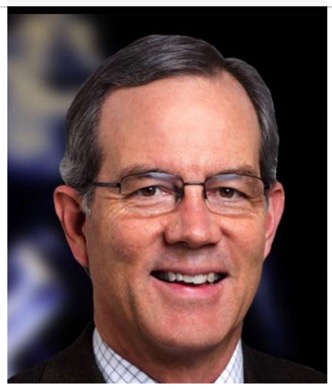
Recently we have been talking a great deal about Legacy Cultures. These are cultures built on values and principles and have the ability to survive personalities. The unfortunate fact about most organizations is that they are dependent upon the personalities of the organization’s key leaders. Even if there is excellent alignment between the personalities of those leaders the culture depends on those personalities. Even if the culture is a positive one, sustaining that culture will depend on sustaining the authority of those key leaders. Allow that team to be significantly altered and the culture can be destroyed. We’ve seen it happen and we know that culture destruction can be avoided! One great example of how this can be done is TDIndustries in Dallas, Texas. Current CEO, Harold MacDowell (pictured here), is the third in a series of CEOs that have all lead based on a set of core values. Those values are:
Build and Maintain Trusting Relationships
Fiercely Protect the Safety of All Partners (a Partner is anyone who is associated with TDIndustries)
Lead with a Servant’s Heart
Passionately Pursue Excellence
Celebrate the Power of Individual Differences.
So how do you do it? How do you create a culture that is not dependent upon the personalities of those key leaders? We’ve discovered that the only way to do it is to create a Legacy Culture. How do you do that? It is fairly simple, but it is not easy. This article will lay out the steps, but I will preface that discussion with this caveat; most organizations cannot do it on their own. The reason they can’t is because they always seem to try to do this work without devoting enough resources to the process. The main mistake is that they assign the task to someone who has other critical responsibilities. Often it will be an HR specialist. The problem with this is that making sure that the organization is fully staffed is critical to organizational success. Culture development looks less important than finding critical staff. However, putting off culture development can make every other organization function more difficult to carry out; especially those functions associated with Human Resources.
Step one in the process of creating a Legacy Culture is to solve the culture development focus problem. Organizations need to make sure that the leader of the process is either relieved of other responsibilities or comes from outside the organization. We are obviously biased towards the outside solution, but we do see an advantage to using someone from outside. By doing this you create a neutrality that an insider can’t achieve. There will be some more difficult conversations that will need to take place. If confidences are to be kept, organization members often feel safer when the person they talk to has no long-range personal interest in the organization.
No matter which approach is used, there are some basic steps to follow. Once you’ve taken care of step one, eliminating your Cultural Focus Problem, you can move on to step two and conduct an analysis of the existing culture. This analysis looks at everything that is done that is critical to the success of the organization. Then you must examine how these things get done in the organization and how organization members feel about the way things get done. This creates the cultural baseline. Once the organization is in agreement that this is the way the culture really is, you can move on to step three. This step is to decide what the organization wants the culture to be. This is accomplished by clarifying what organization members believe the most important values and principles are. We usually look for all values and principles and then come to an organization wide agreement on which of these are held by everyone. These universal values and principles become the core values of the organization. Now we can describe what behaviors are consistent and what behaviors are not consistent with those core values. This leads to the required behaviors and the not to be tolerated behaviors. These expectations are then clearly communicated and the consequences for deviating from the expectations are established.
The last step in the process is implementation and sustainment. During this implementation and sustainment phase, too many organizations think the hard work is done. Nothing could be further from the truth. All the previous steps are just the set up. This is where the real work begins. This is when many people will make the statement, “just wait a little while and everything will go back to normal” or “this too shall pass.” This is when everything needs to be monitored and a great deal of energy will need to be expended to keep the ball rolling up the hill. As soon as you take a break, and let go of the ball, it will roll back down the hill. The culture development process never ends. Its just like our bodies. If we stop exercising and eating healthy foods, we become less healthy, start to deteriorate, and eventually we will no longer be a viable being.
This entire process will take months if not years to complete and it is best to consider the work never done. An organization is very much like a living organism. The greatest amount of an organism’s energy is used, everyday, just to maintain its health and wellbeing. This is true of organizations as well. Whenever an organization thinks it’s work is done on any change initiative, it usually results in returning to the status quo. Without an ongoing effort to sustain the change, most people will go back to how they have always done things. It is much more comfortable and takes little or no energy to do it the old way. Subconsciously, each person is thinking I have a job to do and all these changes are keeping me from doing my job.
So, how do you sustain the effort. It starts at the top. From the CEO, through the other chief officers, on to the VPs, managers, and supervisors. Each leader must start living up to, and holding one another accountable to, these new expectations. No one gets a pass. If you do not live up to the core values and principles, there must be a consequence. Some values will be absolutes and failure to adhere to them may mean separation from the organization. Others will allow for an individual that doesn’t meet the expectations to learn, grow, and correct the behavior. Legacy Cultures make sure everyone knows all this right from the start. And, these values and principles are communicated regularly. It’s not a one and done scenario. Every opportunity to emphasize the organization’s values and principles is used. Members of the organization can never hear them too many times.
When an organization operates based its core values and principles, its culture no longer depends on the personalities of key leaders. People conduct themselves based on these core values and principles for two significant reasons. First, because doing so is in their own best interest and the best interest of all their colleagues and of the entire organization. Second, by operating based on these values and principles, the organization becomes the best it can be for the world that is served. Some will look at these ideas as being soft and unrealistic. We say these ideas produce more capable and caring workers who turn out higher quality products and services. The increased quality impacts the sustainability and profitability of the organization. We’ve seen companies increase their profits by as much as 10 times. And most exciting about these companies is the fact that when the CEO moves on or retires, the company won’t skip a beat. One of the companies we’ve been working with has a culture that just won’t be stopped now. They love their CEO but they’re not afraid of his impending retirement. They know that the company will insist that his replacement adhere to the same values and principles that everyone adheres to today.
This is a Legacy Culture. A culture that so clearly defines what we are and what we are not, that no one is confused. Every member of the organization is on board. In fact, during the hiring process, potential employees are told what is expected and they are assessed to determine if they are a fit to the organization. Each new employee undergoes the same on boarding process and receives the training needed for success. I’m not sure where this quote comes from, but I think this the right attitude to have. “Navy SEALS say, when you’re under pressure you don’t rise to the occasion, you sink to the level of your training. Train Well.” Performance reviews are learning experiences and development of new skills is the continuous goal. Legacy Cultures believe in leaving nothing to chance. They are intentional.
Ultimately, whether an organization pursues a Legacy Culture or not will be determined by the amount of grit possessed by its leaders. If grit is measured by a person’s passion and persistence, as suggested by Angela Duckworth in her book Grit, then those with enough passion to make it their top priority and the persistence to keep up the good fight in the face of overwhelming odds will achieve this level of a culture. But the payout is huge and, in our estimation, fully worth the effort.
I was asked these questions this morning. “What about the personality of the leader? Doesn’t that affect the leadership act? Doesn’t the personality effect how the leader behaves?” The answer to these questions is absolutely. Personality does effect the leadership act and the behavior of the leader. The personality does not go away.
Legacy Leaders understand that the people they are tasked with leading have a variety of personalities and behavior patters. Those personalities and behavior patterns will, very likely, be different from those of the leader. If the the leader simply says, this is who I am and all you followers will have to just get with the program, follower-ship will be diminished and this does not help the leader achieve the outcomes that are desired. The Legacy Leader gets the notion that it is incumbent upon leaders to modify their behaviors to help the team move forward. If the door is locked, don’t try to break it down before you at least make an honest effort to find the key.
The Legacy Leader has the ability and skill to speak the many languages spoken by the followers. They also have the ability to understand followers’ motivations and drives. Legacy Leaders use their knowledge, understanding and ability to speak to their followers in ways that they will understand and know what to do and how to do it. When we say that Legacy Leaders lead based on values and principles not on personality, we are not saying that their personalities cannot exist. What we are saying is that Legacy Leaders do not use their personalities as a club to beat their followers into submission.
Becoming a Legacy Leader is not easy. It does not happen over night. Legacy Leaders will not be perfect and will not be guaranteed that they will not make mistakes. You never arrive at the Legacy Leadership summit; you are always in the process of becoming. It is not a destination, it is the journey. The more we learn about people, the greater our understanding will be and the more capable we will become. We learn new stuff about the human being and the state of being human every day and this new knowledge helps us get better and better and better.
Dr. Jay Newman; Founding Partner: Culture By Choice
In my last article I laid out what
constitutes Legacy Leadership. You will recall that Legacy Leaders lead from a
core set of values and principles. These leaders understand that we need
tactical and strategic leadership, but that is not enough. Legacy Leaders understand
the two whys for their organization: why doing what we do is beneficial to all
of us in the organization and why doing what we do is beneficial for the world
beyond our organization. The Rev. Desmond Tutu of South Africa understood these
principles. He knew that ending apartheid and moving through the truth and
reconciliation process not only would help heal his nation but would also be
the best example they could ever set for the whole world. Conversely, there
were many who just wanted to move on. They looked only at the strategies and
tactics of the transition. If strategy and tactics are all there is, the end
can be used to justify the means. For every problem there must be someone we
can blame. Every opportunity comes with the chance of failure and any failure
could cost me my job.
Too many organizations have become dysfunctional because, the
people have made it that way. They have sought easy solutions to complex and
difficult problems. One of the most common phrases one might hear is; it’s very
simple, if we would just do this or that, the problem will be solved. But, to
paraphrase Einstein, you cannot solve a problem using the same thinking that
created the problem.
Legacy Leaders get this. They understand that solving
problems requires an open and growth-oriented mindset. They also understand
that failure is not inherently bad. It is failing to learn from our failure
that is bad. Many organizations can’t stomach this Idea. Every failure means a
set back and since time is money, every failure costs us money. Every failure becomes
a good reason to fix the blame on someone else and thank God it’s not me. There
is always someone to blame and if we can find someone outside of the board room
or C Suite to blame, the jobs of leadership will be more secure. That security
is an illusion. And, we keep buying this bologna. It’s not an issue with one leadership
theory or any other. It is a systemic disease associated with way too many organizations;
our federal government included.
When you apply this concept to larger organizations, it’s
easy to see why so many are so dysfunctional. With all the finger pointing and
blaming, the power to make good things happen is always in someone else’s
hands. Many leaders can’t make any progress because they are unwilling to take
full responsibility for what they are doing. It’s always someone else’s fault
that bad things happen. The very first value we should demand from anyone we
select for any office or place in a position of authority is the value of
personal responsibility and accountability. In that light, a key leader facing
some failure would not tell us they don’t know who was to blame for the failure
and they certainly would not hold a hearing to find out more. If our key leader
was facing a failure, that person would simply say that didn’t work as we
planned. I am going to study what happened to see what we can learn from this experience
and then we’ll do better next time. And we the people, not being perfect
ourselves, will say great. Let’s all learn together and grow together and make
this Place the best we can make it.
So, how do we fix this? The first step is we all need to
stop blaming others for our problems. Our national and organizational problems
are an extension of the very personal problems we all face. We must each take
responsibility for the problems we each create and work towards a “values and
principles” based solution for each of those problems. Unfortunately, in my
experience, I’ve met far too many people who have never really decided what
they truly value or on what principles they should live their lives. And, we
have found others who have a pretty good idea of what they value and what
principles they adhere to, but their followers are uncertain as to what is
really meant by the values and principles they espouse. We must clarify,
define, and provide examples so that every one in the organization knows what
we mean when we share our values and principles. In order to stop blaming
others we each must know what we stand for and then examine our own actions in
the light of our own values and principles. When we know how our own actions
result in where we find ourselves, we have a chance of finding a way forward. If
it is someone else’s fault, I have given the power and control of my destiny to
the person I blame.
An exercise we have done with some of our clients is a
values and principles clarification activity. In this activity leaders state
what they believe the key values and principles of the organization are.
Leaders then come to an agreement as to what the top 5 or 6 statements are and
then they carefully define what they mean by each of these statements. In one
case our client condensed their values into 6 words and then wrote an
organizational definition for each of those words. An example is the word
integrity. If integrity was one of the key values, that organization would do
the following: When we say integrity we mean: People do what they say, say what
they mean, meet established deadline, and complete their work with the highest
degree of quality possible.
Legacy Leaders get this stuff. They understand that it
doesn’t do anyone any good if they complain and blame. They understand that
success comes from hard work and behaving in a responsible and respectful way.
The legacy Leader realizes that leading from a basis of values and principles does
more good than any fault discovering ever could. The Legacy Leader, no matter
who is being led, totally gets their role in creating a culture that promotes
success and cares for people. Legacy Leaders make positive differences every
single day. Our goal in working with any organization should always be to
create a culture that values people and operates in their best interest. If you
can’t do this, then you can’t be a Legacy Leader.
So, how do I become a Legacy Leader as opposed to being a
blame leader like so many leaders in our world? It starts with making sure I have
and live by my own set of values and principles. Next, I must make sure that my
values are aligned with the values and principles of organization I desire to
lead. If I see inconsistency between my values and principles and those of the
organization, I’ve an important decision to make. Do I try to modify the values
and principles of the organization or do I find an organization that is more
aligned with my values and principles? The answer to that question is the million-dollar
answer.
The direction you go must be based on four critical factors.
First, how likely is it that you will be able to change the values and
principles of the organization? Second, do the people who brought you into the
organization actually want you to change the organization? Third, how resistant
are the people in the organization to change? And fourth, do you have the energy
and stamina to make it happen?
Is there a model for making this happen in an organization?
There most certainly is, and the best leaders seem to know just how to apply
the model. Legacy Leaders know that you cannot force a set of values on anyone,
but they also know that you can help people realize what values and principles will
help them achieve more. By picking apart key roles, functions, and processes of
the organization, and examining how these are to be fulfilled, you begin to
reveal the key values and principles that drive the organization. For example, if
a key function is to provide customers with a product that works the first time
and keeps working for the next 5 years, the value of reliability is revealed. If
a key role is to listen to customers and make sure that what we do for them is
exactly what they want, the value of customer service is revealed.
If we take each of our roles, functions, and processes and
dissect them in this way, our existing values will be revealed. The Legacy
Leader can use this as a platform for improvement and as a basis for building a
legacy culture. The “how we do things around here” is the culture. The “how we
ought to do things around here” is the desired culture. When the existing culture is revealed, we can
all answer the question; is this what we want? In most cases, we have found the
answer to be, sort of. Some of the aspects of the culture are right on target.
Some aspects are a little off the mark. And sometimes, some of the cultural
pieces a totally out of place. Most organizations don’t really know what their
culture is. And because they don’t really know how things are being done, they
haven’t always examined how they really want things to be done.
Digging into what’s happening and how it’s all happening
takes time and it takes patience. In the fast-paced world of business today,
too many organizations decide that they just don’t have the time to do all that
work. But here’s the catch. If you don’t do this, you run too large of a
financial risk. Turnover of employees and customers costs businesses hundreds
of thousands of dollars each year, if not millions. Getting a handle on your
culture gives you the chance to make a real difference. We’ve seen it over and
over. Taking the time to determine what you want the legacy of the company to be
and then operating based on those legacy values and principles, changes the ballgame.
Legacy Cultures and Legacy Leadership:
Dr. Jay B. Newman
Founding Partner Culture By Choice™
In talking to many of our clients, especially those who have either built their own companies from the ground up or who have taken over companies and created a huge values laden footprint within the company, we have discovered that most of those leaders have a very common desire. That desire is to make certain that what they have built persists well into the future without being destroyed by others who just don’t get what they have built.
What these leaders have described to us is a very strong desire to sustain their creation through what we refer to as a Legacy Culture fueled by Legacy Leadership. So, what is a Legacy Culture? A Legacy Culture is an organizational culture that has been very carefully crafted so that there is full alignment between the hopes, dreams, and values of the Legacy Leader and all of the strategies and tactics used by all of those who are tasked with delivering on those hopes, dreams, and values. Our first President, George Washington, was just such a leader. There have been failures at the helm of our nation, but none has been able to destroy the Legacy that Washington and our other founding fathers established. This Legacy is resilient because it is founded upon a set of core values and foundational principles. No matter what happens, we always return to these values and principles.
What is a Legacy Leader? In every organization, leaders truly need to be three types of leaders; Tactical Leaders, Strategic Leaders, and Legacy Leaders. Tactical leaders pay very close attention to the moment-by-moment actions of every person within their leadership sphere. Every action must be focused on producing the outcomes that help the organization achieve its goals. The Strategic Leader pays very close attention to all the strategies that have been created to maximize the effectiveness and efficiency of every level of operations. Every tactic deployed must be aligned with a specific strategy which have each been designed to help the organization succeed. Most businesses stop here. They believe if they have the right tactics associated with the best strategies, they will create an organization that will be second to none. However, that is not the whole picture. These organizations have a weak spot. That weak spot is that leadership doesn’t understand the 2 critical whys for the organization. President Washington understood these two whys for the United States. The first why is why doing all of this makes us better people and the best possible people for this organization. The second why is why all of this makes our organization the best possible thing for the world around us.
Legacy Leaders totally understand the 2 whys and they spend a good portion of their daily efforts driving these inspirational concepts home to everyone they touch. In the mind of the Legacy Leader it’s not enough to be the best in the world, they also want to be the best for the world. The Legacy Leader knows the organization’s core principles and values and lives them and speaks them every minute of every day. Every strategy developed must align with those core values and principles. Every tactic designed to achieve all those strategies must also be aligned with those core values and principles. Every employee and everyone hired must be the type of people who can also live and breathe these same core values and principles. When this is accomplished (and very few companies have arrived at this level) leaders know that when they must walk away from the reins of their company, the company will not skip a beat because everyone coming up through the ranks is aligned with this Legacy Culture.
How do you create a Legacy Culture? First everyone must understand that Tactical Leadership and Strategic Leadership are important, otherwise how will the business get conducted. But it cannot stop there. Every C-Level Leader must also adopt the belief and place the highest value on, only doing business with the company’s core values and principles in mind. Rather than just being warm fuzzy ideas that are on the poster on the wall, they must be the underlying framework upon which all business activities are measured. It’s more than did you get it done, it’s also did you get it done in a way that is consistent with what we say we stand on as a company?
The second step in achieving a Legacy Culture is to make sure that every position in the company clearly states that all actions are to be taken with the core values and principles in mind. When a job description says that a position must conduct a certain action, that job description should also state; and this is the way we expect those actions to be taken. If the values of the company are a poster on the wall and not explicitly stated within the job expectations, many employees will believe that these ideas are nice but, as long as I get the job done, who cares! This is how cultures get poisoned, because people think it’s all about strategies and tactics, not the underlying values that gave purpose to the whole process. Therefore, if I’m not a nice, principled person and others get offended by the way I do things, that’s their problem. Furthermore, if that person ever achieves a high enough level of authority in the company, all bets are off!
The third step in achieving a Legacy Culture is to realize that the work is never done. There is never a point where we can say, OK, now we have the culture we want. Now we can just do our strategies and tactics. The continuous improvement of every aspect of the culture is the work of every person in the organization. From the CEO on down, everyone, everyday must make certain that there is alignment between every action and the core values and principles of the organization. Of course, this all depends on people truly knowing what the core values and principles are. We have seen many companies that haven’t really thought about it. If your core values and principles are your rudder and you don’t truly know what they are, you run the risk of continuously going in circles.
The Great American Experiment is still in progress. But it persists because the early Legacy Leaders of our Nation understood that there was much more at stake than just the creation of a new nation. If we operated this experiment based on a set of undeniably common values that could be shared by every person, no matter what their status, the Nation would have a greater chance for long-range success. These principles are ensconced in our Constitution and are initially summarized in our original 10 amendments, our Bill of Rights. Presidents have tried to circumvent the constitution, but the shared powers of our Nation create the checks and balances that prevent a President or a Congress from high jacking our Country.
Our great companies need to learn this lesson as well. Companies built upon sound values and principles have a much greater chance of surviving the changes of leadership that might come along. This is so because any new leader will be vetted based on his or her personal alignment to the stated principles and values. Creating a Legacy Culture supported by Legacy Leaders is the best we know of for ensuring that companies will experience the long-range success that our Nation has experienced.
This is the first post on my new blog. I’m just getting this new blog going, so stay tuned for more. Subscribe below to get notified when I post new updates.


 Cheryl Lohner
 drjbnewman
 Newman’s Legacy Leadership Blog