I think it’s time! We’ve seen too many years of blaming everyone else but ourselves for the situations we find ourselves in. But the truth is, we’ve done it to ourselves. The decisions we make lead us to the outcomes we get. The level of our efforts create the results we experience. Our inability to accept our personal responsibility for what happens has paralyzed us and been our greatest liability. If we want to make our world a better place, we will each need to say “ME FIRST!” By this I mean I will not wait for others to take action, say their sorry, roll up their sleeves, speak the truth, or do any of the other positive things that can make my life better.
In talking with a client the other day I was told that the way things had gone lately had just made him angry. He’d been lied to and treated unfairly and he felt like he was just going to the office every day as an angry man. He couldn’t forgive what people had done to him. It was just awful the way he was treated. I asked him if the people he was angry at knew he was angry? He said, “gee, I don’t know!” So what good was his anger doing? If all he is doing is getting angry at the office and the only people who know he’s angry are his employees, who’s being hurt? Only the people he cares about. By forgetting about it and moving on he can find personal peace and his employees will be able to get back to work and make good things happen.
I also heard about a woman whose husband failed to get the house cleaned up while she was visiting her sick mother. There were dishes in the sink and clothes overflowing the clothes hamper and she just blew her top. Her husband hung his head and apologized for letting things go but she just poured it on more. She belittled him for being lazy and told him to clean things up. She stayed mad at him for a month and refused to even talk to him. Their two children didn’t know what to make of the situation and we’re afraid of what was next. After a month her husband asked her why she was holding such a grudge. He told her he loved her and he had been doing everything he could to be a 50-50 partner since she got back. She refused to talk to him and continued her display of anger. Finally, after 6 weeks, the woman talked to her mother and told her what her husband had done and that she was making sure he knew how mad he made her. Her mom, who was still not back to full health told her daughter that she wasn’t punishing her husband, she was punishing herself. The poison she was aiming at her husband was making her a bitter, unhappy person. Her mom told her to make a nice dinner tomorrow night and apologize to her husband for acting so childishly. Her mom finished her advice by telling her, “the best thing any person can do for themselves is to be the first to say I’m sorry and the first to forgive.”
It was these two people that convinced me that we need the “ME FIRST Movement.” It’s not about being selfish. It’s about being selfless. By being the first to take personal responsibility, we can change our world! And as I a see it, our world could use some changing. If you read this blog post, how about it, can we start a “ME FIRST MOVEMENT?” Like this post, share it, or make a comment. Let’s start a movement!
We all have a personality. Steven Sissler, author of one of my favorite books, The Four People Types, tells us that our personality stems from how much we are of each of these types; mad, sad, glad, and scared. He explains that no one is just one of these but one type can dominate how we view the world and how we choose to interact with it. People can have a high anger quotient and this will cause them to charge through their world at a very fast pace with a very high sense of urgency. But, most people with a very high anger quotient learn, over time, to slow things down a bit. Other people might have a high happiness quotient and this will cause them to go through life spreading cheer, sunshine, and gladness. They are sometimes accused of being Pollyannas but they usually learn to tone it down a bit and recognize that not everyone sees the world as an endless ray of sunshine. And then there are the people dominated by a doom and gloom outlook or those who are in constant fear. As I said, very few people, if any, are one dimensional. A very high percentage of people are a combination of these four types with stronger tendancies towards one or two of them. One thing that experience does tell us, however, is that there is no one best personality for every situation and circumstance. Therefore, the most highly successful people tend to be able to adapt to the needs of the situation they face without confusing others or losing their own identity.
In order to become adaptable to the level required to maximize one’s chances for success means that people need to have a purpose for their lives. Without a true purpose, people will change on a whim and without thought about how the change might affect them in the long-run. Failing to adapt, on the other hand, quite often results in an individual being at war with the world they inhabit. They often see the world around them as failing to be fair to them and their own personal needs, want, and desires. Learning how to fit in without losing one’s identity is one of the keys to becoming a mature adult. When we interact with people who’ve learned the art of conscientious adaptation, we see them as being authentic. If I am the leader of an organization, my goal should always be to have everyone one on my team be as authentic as possible while still being able to interact with the diversity we find in our world every day.
Finding our Purpose is not always easy to do. It takes personal reflection and self-evaluation. This isn’t as simple as it looks in print. If we think about what we love to do that really makes a difference in our world and then also think about the totality of our behavior, we can begin to see that there are productive behaviors, neutral behaviors, and destructive behaviors. Our Purpose in life will exist in a sweet spot that exists between what we love doing, makes a difference in our world, produces outcomes that others need, want or desire, and results in personal sustainability. Making our purpose more than just an idea means making sure our behaviors are as productive as possible. By evaluating everything we do in light of our purpose, we begin to see what works and what doesn’t. Not many people do this but the most highly successful do. The best of the best take time every day to review their actions against their self avowed purpose and make note of what they need to do better tomorrow. Then they begin each day by reviewing their notes from yesterday before they get started on their day. Most people only think about their behavior periodically and by failing to intentionally engage in personal reflection and evaluation every day repeat their unproductive and potentially destructive behaviors for way too long.
Once we are clear on our purpose in life, development of a life pathway is our next big step. Instead of bouncing from action action, people with a purpose are focused on taking actions that increase their chances for success. Spending time on unproductive behaviors delays success. Spending time on destructive behaviors prevents success. People with a purpose live on the pathway of intentional, mindful living. When an organization has teams full of people with a purpose and those purposes are aligned with the organization’s purpose, the outcomes are extraordinary. It should be every organization’s first and most important goal to make sure everyone in the organization has found their purpose, is in a position that is aligned to their purpose and knows how to engage in self reflection and self evaluation. By doing this, an organization can so dramatically increase their probability of success that leadership will be amazed.
So, why don’t more companies do this? Why don’t they take the time to assess their people’s personalities, help them find their purposes, and then provide the time for them to do the necessary self reflection and self evaluation? It’s time! They fail to realize that investing this time will save them time. When all your people operate based on their purpose which is aligned to the company’s purpose, and when each person is dedicated to a pathway that leads to personal fulfillment and organizational success, everyone wins. How can organizations find the time to do this critical work? They never will. It must decide that this is so important that the time must be devoted to accomplishing the task. In many instances it is helpful to devote a person to manage the process. It is what I often do for our clients. If you are interested, send me an email or message and I’ll give you a free walk through the process.
One of the disadvantages that public schools have compared to private companies is that they are governed by an elected board. These school boards can have significant changes in philosophical leanings as a result of a popular election. If a group of citizens decide to take a district in a new direction there is very little appointed school leaders can do about it. But, creating a Legacy Culture is not impossible.
Although the task is arduous, education leaders can create a culture that has a very good chance of surviving school board upheavals. The mistake that too many educators make is that they do not engage their community until they need something. When this is the approach used, many people in the community feel that they are poorly informed and that the schools are constantly taking advantage of them. This can result in community members banding together to make sure their voice is heard. This can lead to “rogue candidates” for the school board who may not have an accurate view of what really goes on in the schools but have a strong opinion about what needs to happen. Historically, school board elections do not get very large voter turnouts. As a result, a motivated few can have a significant impact. In this environment, the old adage of an ounce of prevention is worth a pound of cure should become the order of the day.
Let me offer a few examples of school leaders that I believe are embracing the principles of Legacy Leadership. I’ll offer an example of a rural, suburban, and an urban superintendent. Each of these leaders has learned an important lesson about school effectiveness. That lesson, you can only go so far without the support of your community and if you’re being evaluated based on the achievement of all your students, only going that far will never be enough.
The first school leader I want to highlight is from a small district in a small county in one of the poorest areas the state. The superintendent has only been in her position for a little over 3 years but what she has done has been quite remarkable. The district has had a fairly rough go of it for more than 30 years. Declining enrollment, mediocre student performance, and fairly high teacher turnover rates have been the trend for most of those 30+ years. What this superintendent did in her first few days on the job set the tone for the next 3 years.
This rural superintendent began her time in the job by inviting community members to meet with her to help her understand what was really important to them. Based on what she learned from numerous meetings, she acquired an understanding of what community members really valued. She learned that community members wanted an open relationship with the schools and that they felt like they had been shut out of it for way too long. The only time they ever heard from the schools was when they needed more money or volunteers. In the words of one senior community member, “if the only time I hear from you is when you need me to cough up more money, my answer will always be no.”
She also learned that the community really cared about the kids and wanted them all to succeed but felt like the schools had shown favoritism in the past. Several people pointed to examples of athletes that got special treatment while their music students were wearing the same band uniform they had worn when they attended the high school 20 years ago.
A third important lesson was that community members and parents didn’t want to be treated like idiots. Just because they weren’t as educated didn’t mean they didn’t know anything. Most educators don’t think they treat parents like idiots but I can tell you, with 35+ years of experience in education, we unintentionally do. We talk education talk and don’t translate it into parent talk. And parents feel like we do it intentionally to make them feel dumb. By having more regular conversations, not just parent-teacher conferences, teachers learn how to better communicate with parents and parents learn how to better communicate with teachers.
As a result of her meetings with community members, this superintendent learned that the community valued open and honest communication, fairness and equity, and treating each other with dignity and respect. These values became the cornerstone of her administration and all employees were involved in developing strategies to make sure everyone was treated accordingly. Furthermore, every decision is now being weighed against those principles. The outcomes have been moving in the right direction and the mood of the district has become much more positive. The culture isn’t quite there yet but it has moved way down the road towards a Legacy Culture.
The second superintendent serves a suburban school district in a wealthy, highly educated midwestern suburb. I say he serves the district because that’s what he has said to me. He thinks of himself more as a servant than he does a boss. He feels he serves at the pleasure of the school board, parents, students, and community. If he doesn’t know what they need, he can’t serve them. So, his number one job is to always know what his district needs. In some cases the needs are bigger than education. In those situations, rather than saying that’s the job of city government or the courts or business, he says what can your schools do to help. For this superintendent, the most important value is collaboration. His motto has been “working together works!”
He wasn’t always like this. He was a very traditional educator and had the belief that all those graduate classes in school administration had to have prepared him for the role of school administrator. He knew what needed to be done, so all those amateurs should just leave him alone and let him do what he was trained to do. But an experience with a troubled girl when he was a high school principal profoundly effected him and made him rethink his approach to administration. That young lady was talented at baiting her teachers into a confrontation that usually led to her being referred to the office for disciplinary action. The first couple of times he dealt with her he assigned her to in school suspension. And then he required her mother to come to school to either get her daughter to behave or she would have to have her at home for a week of out of school suspension. When the mom came in, she was in tears and told him she didn’t know what to do. She didn’t know where to go for help. She explained that their home was in turmoil since her husband left them 18 months before. Her husband and her daughter were very close and now he’s gone and she can’t understand. She blamed her mom for everything and She didn’t know what to do. This principal immediately knew, sending the girl home would not help the situation, so he called the girl’s counselor and asked her to come to his office. Together, the mom, the counselor, and the principal worked out a plan for moving forward. A meeting was held including all the girl’s teachers, the counselor, the principal, and the mom. The situation was reviewed with the entire team and this group of 9 adults went to work to try to make the world a better place for this girl.
Things didn’t get much better at first but at least everyone understood what was going on. They decided that the teacher who had the fewest problems with the girl would start acting as the team manager. That was her English teacher. That teacher took the time to really listen to the girl. She began to open up and share. In a few weeks the teacher asked her if she’d like to share her problems with her counselor but the girl said no, she didn’t trust the counselor. So, the principal called a community member he knew, who worked as a counselor for troubled youth at a local nonprofit organization, to see if they could help out. That counselor said absolutely, that is exactly what we do. The principal shared that news with the English teacher and she asked the girl if she would consider meeting with that counselor and she said yes. She had heard about the organization from a friend and thought they were okay. So, the first cross organizational collaboration was started. It wasn’t the school all by itself trying to push kids into shapes defined by preexisting holes. It was now teams of adults all working to help every kid succeed. And that meant a whole new paradigm regarding how to get the job done. Eventually, every major issue was handled through collaborative arrangements with multiple agencies and the schools. The principal became the superintendent and the district, from the school board to the teachers, administration, parents, and community all adopted the motto “working together works.” This district is highly successful and well regarded in the world of education. More districts could learn from their example.
The last superintendent I will mention is the superintendent of an urban school district that truly broke the mold of the typical urban school superintendent. Statistically, urban superintendents last less than 4 years in a position. This superintendent will retire after 17 years at the helm of this district and after spending her entire career in the same district, she will have devoted more than 40 years to the children of her community. When most urban superintendents come into cities from the outside, being a homegrown superintendent is a novelty. But, being homegrown offers advantages that all the other experiences can never provide. Having an intimate knowledge of your community, it’s businesses, organizations and its families allows a superintendent to have insights about how things work that would be difficult for an outsider to have. The opposite, however, is also true. When you are in the same district for so long, everyone knows just about everything there is to know about you as well. To survive for so long in one district and to be recognized as one of the best there is; you cannot bluff your way through. You must be a person of great integrity that has an amazing capacity to build trusting relationships.
Working from a foundation of values and principles allows a superintendent to build something very few can, a Legacy Culture. This superintendent’s district states the following core values:
Core Values
We value:
Student achievement as the heart of our work.
Equity in educational opportunities.
The diversity and uniqueness of our district and community.
The accountability of the school board, the administration, employees and teaching professionals.
Open and honest communication with our community, parents, and students.
Partnerships with business, governmental, and community agencies.
Our community’s support, sacrifice, and contributions.
The ability to change and meet all challenges.
Facilities that are clean, safe, and well-maintained.
This district also has just three goals that are directly related to those values. Those goals are:
Goal I: Achieve and Maintain Academic Excellence: Eliminate the achievement gap among all groups of students by maximizing the achievement of all.
Goal II: Engage Parents and the Community: Engage all segments of the community to support the education of young people.
Goal III: Operate effectively with integrity and fiscal responsibility. Demonstrate effective and efficient use of taxpayer dollars by using best management practices and systematic long range planning.
This superintendent is retiring at the end of 2019-20 school year. In many districts, if they have a beloved superintendent with a great track record, finding a new superintendent that can continue to move the district in the right direction is critical and very difficult. In this urban district, the quality of the next superintendent is not guaranteed but they have dramatically increased the probability of finding another great one. Having those core values and using them as their benchmark is an excellent first step. Making sure that every finalist for the honor of serving measures up is the next step. And then continuing to operate by those values and principles in the final piece of the puzzle.
These three superintendents are exceptional. Too many school districts keep jumping on the flavor of the month bandwagon. Finding a district’s true north and sticking to it is the only way to achieve excellence. We can all learn from these superintendents. I haven’t named these three because I’m writing about them based on my observations and I have not asked for their permission. If they read this blog and want to be identified, I’ll gladly reveal their names. They deserve the recognition but that’s their call!
One of the great rewards of being a consultant is having the opportunity to engage with many amazing people. Five or six years ago I had the chance to do a little work with leaders from GT Independence. At that time John Carmichael was a rising leader in the company and then circumstances resulted in a fairly sudden elevation into the CEO role. Since his ascendance into that role, GT Independence has thrived, evolved, and become a leader in their industry. The intentional culture and attention to values and principles has led me to the conclusion that John is a Legacy Leader.
What has John Carmichael done that caused me to tap him as a true Legacy Leader? To make sure I fully understood his actions, I decided to ask him a series of questions. What follows is an abbreviated version of that conversation. If you want to hear the entire conversation, we will be posting it as a podcast on the Culture By Choice website. So, without further explanation, here’s what we discovered through our conversation.
Jay: Hi John, thanks for joining me today for this interview. To help everyone put this conversation into the proper context, can you tell me what it is that GT Independence does?
John: we continue to grow. We’ve reached the end of a plateau. We have to do some painful growth things to get to the next plateau. We want to become a national leader in our industry. This has caused us to have to re-organize our leadership. We’ve grown from 270 employees to 350 employees in just the last few months. We grew 17% in October alone. So to begin with GT Independence is a growth company.
More specifically in the United States, Medicaid is the insurance program that serves people with disabilities or low income. These people rely on Medicaid to meet a number of their needs. What GT Independence does is assist those individuals that need long-term care services, get that care while remaining independent and not have to resort to using nursing homes. GT Independence contracts with state Medicaid programs to help people hire their own in-home support providers. We act as the payroll agent for these individual Medicaid recipients. We serve as these individual’s HR Office. They become the employer. They get their own tax ID and they select, hire, manage, fire and pay their own providers and we do all the payroll, compliance reporting to Medicaid and keep track of everything and make sure the program is running smoothly.
What happens as a result of what we do is the client has control of who comes through their front door, instead of some 3rd party agency sending somebody you’ve never met before. You’ll get much more control over how your critical supports are delivered. This results in getting much better outcomes. The Robert Wood Johnson foundation did a very detailed study of this about 20 years ago. What they discovered is that the incidence of unmet needs, incidence of caregiver stress, and incidence of negative medical events such as falls and other accidents, is greatly reduced when individuals are in charge of their own care supports.
Jay: I recognize you as someone who is trying to create a lasting legacy that is not dependent on you but on the values of the company. I think you have a great personality. I think you’re a great young man. But, I know that with this company it’s not all about you, it’s about what the company does. What would you say are the key values and principles that this company operates from?
John: Sure I’d be happy to share that and I think that to be a truly successful leader you have to operate from the basis of values and have to be able to share a vision with your team and help them understand how they can achieve this common vision. If it’s about you, then there’s something wrong. At GT Independence, there is a very clear mission and values we talk about. The mission at GT Independence is to help people live a life of their choosing. At GT Independence we talk about the values of integrity, communication, excellence, professionalism, and respect. We have specific definitions of what these terms mean to us at GT Independence. But overall we have an over arching value of self determination. At GT Independence we use this term to mean “people who need supports still have as much control and say over their services as possible.” That’s the one overriding principle. As the leader of the company I’m charged with fortifying and upholding this principle. This, as a CEO, is the number one job I have.
Jay: How do those corporate values align with your own personal values?
That’s a good question and it’s very interesting. The process we used to come up with these values was a personal introspective process that we used among the leaders of the company. We tried to talk about what we aspired to be for ourselves just personally, and how we might communicate those aspirations to the rest of the company. And we thought very carefully about that and we designed those values based on our own personal definition of those values. So those company values are very closely aligned with our own personal values. And our company, which may be different from a lot of other companies, we use very simple, straight forward terms to define our values. Other companies may get a little more detailed in what their values mean, our values are the kind of values that people learn in kindergarten.
I think our values are essential and important to the company. Another thing I would say is that values can be defined by the leadership and should be, but a company’s culture is discovered. You have to constantly test the culture to see if the values are alive and well in all levels of the company. You have to get feedback and your people have to know you are listening and reacting to that feedback. We all aspire to these values and we do our best to live up to them every day. They are the kind of thing that has to be worked on every day.
Jay: You’ve basically answered my third question which was how do you see these values and principles lived out by the employees in your organization and how you communicate those values to the rank-and-file of the organization? Is there anything additional that you do to make sure everybody understands or to make sure you know that people are aligned and fitting in to the organization?
John: yes, it’s a focus of ours. One of the things the company recently did, was developed an entire new department called the talent department. We’ve separated out some of the duties that the HR department had into a department that focuses on workplace and culture. It’s takes in the areas of leadership, coaching, employee engagement and it really focuses on those. One of the things that is really critical is to test employee engagement. This is how you know if your values are really alive. So we conduct regular employee engagement surveys but we also interview employees. And the questions we ask are about how they view their role? And what elements of employee engagement are present? Or maybe where do we have gaps in employee engagement? And then we take that feedback and institute changes to the culture. We’ve clarified our communication guidelines so that we know what the rules are for communicating with one another. When do you have to return an email? What should you do about those communications and various tactics that help to reinforce our values? Another thing is our quarterly ask the CEO anything webinar. All our employees will log on next Wednesday at 2 PM to ask me any question they want to ask me. Just ask anything and I’ll provide an answer and the whole company participates in that. So those types of things are ways we enforce and grow our values.
Jay: On of the things that happens when you start operating a company based on values and principles, is something we refer to as a controlling idea. And when you were talking about self-determination I kind of got the sense that, that would be your controlling idea. And the controlling idea to me, the way we use it in our company, Culture By Choice, it is that underlying principle that every decision you make, it has to be true to that or you don’t make that decision. You don’t go that direction. We’ve noticed with our own company, that the times when we get into trouble, is when we forget what her controlling idea is supposed to be. So when you do all of that and you have to make all those decisions, especially personnel decisions, like whether you’re going to hire somebody or somebody is going to get a promotion or somebody is going to get positive performance review, whatever it is, those values color what you do so you come up with a set of absolutes you say everybody must do these things and you come up with the opposite side that says nobody is allowed to do these things. Has that been formally stated or is that something that everybody just understands? Do they understand that you must do these things and you better not do those things?
John: yes yes that absolutely has. When you talk about a controlling idea it certainly is the right to self-direction or self-determination. It definitely is the controlling idea a GT independence. We have some promises that we make. Our values sort of come together to form these promises. So one of the promises that is big for the company is that we bring our values to the table. And so, I was pleased win one of our new operation managers, who has just been with the company fairly recently, and was working with one of our new contracts, and came to a decision point when the payer, this Medicaid program payer, asked them to do something that was completely not in line with the idea of self determination. And would have constricted the rights of the individuals we were serving, to fully be able to make their their choices about their own support arrangement. The manager, without consulting anyone at the company, responded firmly to the payer, “no that wouldn’t be in line with our approach to self determination and maybe we could find and consider a different option that would be more in line.” Without having to receive any supervision on the subject and a person who is pretty new to the company, applied our values to a situation and made a decision. And that is so powerful as the leader of this company when you can communicate your values in such a way where people just know what to do and know how they are supposed to behave so yes absolutely Jay self-determination first and foremost and I feel like on the whole we’re doing a pretty good job of communicating that ethic.
Jay: that’s a great example and for somebody so new to the company it tells you that something is happening at GT Independence where people pick up on this value laden culture very, very quickly. One of the other aspects of the culture of any company is between those absolutes,you absolutely must do this and you absolutely cannot do that, there’s a whole range of things that you just tolerate and things that are acceptable and then there’s the barely tolerable and the very acceptable. And with the performance reviews of people, what we are trying to do is get them to move away from the barely tolerable and move them towards the more acceptable behaviors. You can’t have a rule for absolutely every behavior. If that happens within an organization you would end up with with a rules list that would become unwieldy. But, as you take a look at the people who work for GT Independence and you look at their behavior and performance, how do you go about helping them move from the barely tolerable behavior to the more highly acceptable behaviors?
John: that’s a great question and it’s something we’ve explored quite a bit lately. There are a few concepts that we are trying to employ with our leadership team now. Because as I mentioned earlier, the company is trying to expand, to be a national leader, and we’ve had to change our structure and what that does is introduce more complexity to the problem of leadership and it introduces more specialization among the people who are working at the company. So, the role of a leader at GT Independence is kind of changing. The focus needs to be more on coaching rather than managing. For me, the difference between coaching and managing is kind of like painting a picture rather than giving instructions. So, if I have an employee who is just engaging in the tolerable behaviors, what I want to do for them is paint the picture of what superior behavior looks like. Show them, give them an example that will allow them to visualize what a top performer looks like, what the top performers are doing. Give them a vision of what the ideal is. Through that, they can explore for themselves how they might change their behavior. And it’s done in a way that allows people to focus on their strengths rather than their weaknesses and allows them to own their own performance. So if we can get to that kind of leadership at our company then I think we can do a better job at moving the needle towards superior behavior.
Jay: that’s a very good point and that leads me to ask, you as you see this and you see this potential for growth and people are adopting a growth versus a fixed mindset, they’re thinking in terms of how do I continuously get better. That entails setting some specific goals for myself, how do you go about helping people set really important goals for their own improvement? And in light of those personal goals, you’re going to have organizational goals as well. How do you keep those individual goals in line with the organizational goals? That is often a difficult balancing point for companies.
John: it is and the problem is exacerbated because we grow and we grow a lot. We have 20 to 30% growth each year. Things break awfully fast here at GT Independence, and the temptation is to react to things that come down the road, and what that ends up doing is it removes your focus from the goals that you’ve started. So we have a vision, we want to be a national leader in financial management services, so we have some metrics we use. We have some KPI‘s that help us determine if we are meeting that vision.What we’ve done is take that vision apart and broken it down into small pieces, so that we know if we want to be here in 10 years we have to do this next week. And that process, developing that vision, identifying the components, the tactical components, that will get you to that vision are key to our strategic planning process. Then we hold leaders individually accountable for their contribution to those pieces and we put KPI‘s on that. One of the things that is incredibly powerful, when you talk about accountability, and I think the word accountability is really important and when you say the word accountability you envision someone scolding somebody for not getting their job done. But that’s not what we really mean when we say accountability. It involves counting. It involves measuring your performance against what you said your performance would be. A big part of what we do is measure. We measure our progress towards our goals. And I think that allows us to stay disciplined on our goals. Another tool that we use is a job score card. Each individual is responsible for goals on their jobs scorecard. So they will have a couple maybe three or four KPI’s that measure their progress towards their goals as we continue to measure their performance. And we also, on the job scorecard, are going to write down an individual’s expected capacities. So for example, a person who has a sales role might need to have very strong networking competencies. And so we are going to describe for them what those very strong networking competencies are and we’re going to allow that person to identify where there might be gaps or strengths in their competencies, and help them make a plan to address those or to optimize their own competencies. So KPI’s and jobs score cards are great tools for us.
Jay: And I like what you what you’re saying that accountability is not a club you are using. Accountability is a way to help people achieve what they have already said they were going to achieve. That is, we just so often hear that the accountability piece is used as a punishment. We’re going to hold you accountable for what happened. No, the horses already out of the barn, if your goal is to close the door before the horse gets out we’re going to measure you on whether or not you were timely and getting the door closed.
John: Jay, I think a great definition of accountability is, do you know whether you are winning or not? If you can point to a set of numbers that say you are winning then you are accountable. It’s a much better definition then I’m going to hit you with a club if you don’t get things done.
Jay: Wow, this has really been great. There are a couple more questions just just quick little things. No organization can stay operating unless they have adequate revenue flow to keep them above water. And hopefully, if you are a for-profit company you’re going to be profitable. One of the arguments I hear from people is yeah we’d be values driven but we’ve got to make money. You know the quarterly P&L has to show we are making a profit. How do you deal with that? I know part of it is that you don’t have a board of directors that you have to answer to, to prove profits to on a weekly basis. But, how do you make sure you make a profit and still stay true to all those values?
John: there’s a couple of things. I don’t have a board of directors but there are people who own the company, investors and stakeholders, who do expect to see earnings. So the pressure is there to have earnings. The paradigm is that I can’t be values driven because I have to have earnings. My paradigm is, I have to have earnings so I better be values driven. I think that, and we see it in Wall Street, this intense focus on earnings and it’s not just earnings but short term earnings, so I have to be profitable this quarter. If I don’t make my numbers this quarter I’m in trouble. I think if company leaders would focus on delivering value and doing the right things the earnings are a byproduct of that. And that’s been my experience. So, if you take away the unnatural fear of not making earnings in any one quarter, and you just focus on adding value you can see that your earnings will be there. Another thing that is key for us is making sure that you are delivering a total solution and making sure you are optimizing margining that way. If you own 7% of any market you’re doing, probably, pretty well. I really believe that earnings come from margin and that should be focused on more than volume. Make sure you’re delivering the total solution. For example, at GT independence we enroll people face to face, rather than sending them a packet of forms to fill out. And at GT independence we’ve developed our own time keeping mobile application that flows right into our portal. That was a big investment, we are under took the expense to do those things but were able to command a premium in our marketplace because nobody would even dream of going somewhere else for their services. Because, we’re solving the whole problem. So, that’s been a huge way to drive earnings and it’s convenient because it lines up with our values. By removing the roadblocks to self determination, bringing our values to the table, getting people paid, these are the things that we are focused on and they have led to earnings because of their value.
Jay: Wow, this has been very enlightening I appreciate the time you’ve taken out of your very busy schedule to talk with me. Is there anything else you’d like to offer that would give us more insight into how you’ve helped to create this legacy culture at GT Independence?
John: First of all, I’ve loved participating in this interview. Every CEO loves to spout on about their theories and approach. I think when you look to the future, one of the big challenges companies have is attracting and retaining talent and we have to understand that there is a new generation in the workforce. Millennials and that generation after the millennials, what we know about these generations is they’re not willing to sacrifice purpose for money. So if you’re going to attract the best talent in the future you’re going to have to bring people and give them a purpose. Help them feel connected. Help them feel like they are making a contribution. That’s going to be the key to any business success anymore. No longer can we focus on the interests of the owners of the company and have everybody’s role be to drive profitability for the owner of the company. We have to do more for our stakeholders, including our communities, our workers, the industry that we work in, and yes the owners of the company. I think if we take that mindset, the entrepreneurs and the business leaders of this country can solve a lot of the countries problems. I look forward to continuing to be oart of that.
Jay: Thank you so much John I really appreciate it and good luck as you guys continue to grow.
When I was researching the literature for my doctoral dissertation, I discovered that there was a great deal of disagreement about why we do what we do. There were two main camps of theorists. One camp was the needs reduction theorists and the other camp was the expectancy theorists. At the time I naively thought why not combine the two theories. Today, more than 35 years later, I pose the same question. This blog post will postulate my combined theory of human behavior, which upon review of so much that has been written since 1984, I believe is supported by a huge body of research on the topic.
Each of us chooses a course of action based on an expectation that we’ll receive a desired outcome. We are not born this way, we learn to expect to have what we do result in a desired outcome. From birth, and perhaps before, we start experimenting with our behavior. We cry and our parents respond. We put 2 and 2 together and figure out that when we do certain things we get certain responses. We have a few basic needs and our limited ability to express what our needs are leaves us, as babies, crying as our primary behavior to try to get those needs met. As we become more responsible for our own outcomes, the behaviors we must exhibit become more complex. Our needs get supplanted by our desires and we try to act in a way that we hope will produce our desired outcome. Successful satisfaction of our desires results in our expectation that those behaviors will continue to produce those expected outcomes. In a perfect world, every behavior would always produce the expected outcome but, we don’t live in a perfect world, do we!
With the on-going expectation that the same behavior should produce the same outcome, even though the people and circumstances might be different, comes the experience of failures which results in frustration. If we do not learn from these situations, and we continue to be frustrated, it becomes more and more difficult to remain motivated to do what we were trying to do. This can also lead to acting inappropriately and often does in children. As we mature, we realize that we will have to adapt to the world around us. We try different means to acquire what we need to fulfill our needs. In our early years we will try many different behaviors. Some of these will cause displeasure on the part of our parents and they will teach us the difference between acceptable and unacceptable behaviors. As we learn and mature our goal is always to adapt and become more effective in our behavior selection. Most adults do a fairly good job at selecting our behaviors but some do not. Those who are less effective can have considerable difficulties in life. Relationships, both personal and professional, can become nonproductive. This can further frustrate a person beyond the frustration resulting from failed attempts to satisfy basic needs and desires.
As a Legacy Leader, it’s important to understand where your people are with regards to their ability to choose effective behaviors. If you find individuals that appear to be making ineffective choices, you will need to find a way to help them. Sometimes you can be a coach for them but most likely you will need to find another way to help. There will be times when the problems may need professional help and you must make sure they get that help. For the majority of your people, regular reminders and caring open communication will be the best policy. Legacy Cultures are characterized by clarity of behavioral expectations and this will be helpful. Don’t leave it to chance. Be clear, communicate and be intentional. Every member of your team is doing the best they can. They need your guidance to succeed.
Have you ever noticed that some people think the world is coming to an end whenever things don’t go their way. It’s sad to see the infantile behavior of some adults. It reminds me of the old saying, don’t cry over spilled milk! But, then I have to remind myself that we can all be pretty childish at times and we don’t know what’s really happening until we know the full context of any given act. I remember a good friend of mine who started acting really odd and I couldn’t figure out why? So, I asked him if everything was all right and he shut me right down. He told me to mind my own business. I remember thinking, wow is he touchy. I wonder what his problem is? A few days later, that friend called and apologized for his rudeness. He told me he just found out that his dad had cancer and the doctor didn’t have much hope for recovery.
As Legacy Leaders, we are going to have people go off the rails and it’s going to seem like they’re falling apart over nothing, but, if we can find out what’s behind it all, we might find that there’s a problem of epic proportions in that person’s life. From illnesses, to addictions, to financial problems, and so many more domestic situations, our people confront real life beyond their jobs. Those real life issues effect what happens in the organization. Two or three of those on a team can put the team into a tailspin. The traditional approach of “leave your problems at home” won’t work. We really cannot segment our minds and put on our work cap after taking off our family cap. All our caps are really just the same cap and we stick a sticky note on the cap to identify where we are but everybody can see where we are physically. It’s where we are emotionally that will make the difference.
Legacy Leaders understand that what you see is not what you always get. There are so many factors that can get in the way of any given team member’s performance on any given day. Here are a few statistics to demonstrate what we face. Currently in the US, it is estimated that one in eight employees has some type of substance abuse problem that will affect their performance. In Canada, 500,000 people miss work each week because of a mental health problem. And then, everyone else is just an incident away from the wheels falling off. What’s a Legacy Leader to do? How do you keep your company moving in the right direction when there are so many energy bandits among us?
An energy bandit can be a person or a condition. Either of these can suck the emotional energy out of a team. When a crisis occurs, either in the life of a team member or within the team itself, the Legacy Leader must address the issue head on or it will get out of hand. But Legacy Leaders should always address these issues with compassion. The human energy bandits in our midst usually have experienced something in their lives that has sucked their emotional bank accounts dry. Their energy thieving behavior is just their attempt at getting their emotional energy back. The problem is, however, the way they go about it never really restores their lost energy and everyone else is having their energy depleted as well. The product of all of this is a debilitating loss of emotional energy for the whole team.
When energy bandits succeed in depleting a team’s energy resources, that team will become dysfunctional. To correct the problem a Legacy Leader must take some very important steps. The first step is to make sure that you know exactly who or what the energy bandits are. The second step is figure out why those bandits are going after the energy. And, the third step is to provide an alternative energy source for those bandits so they can get their energy needs met without depleting the team of its energy. The hardest part of this process is keeping the energy flowing.
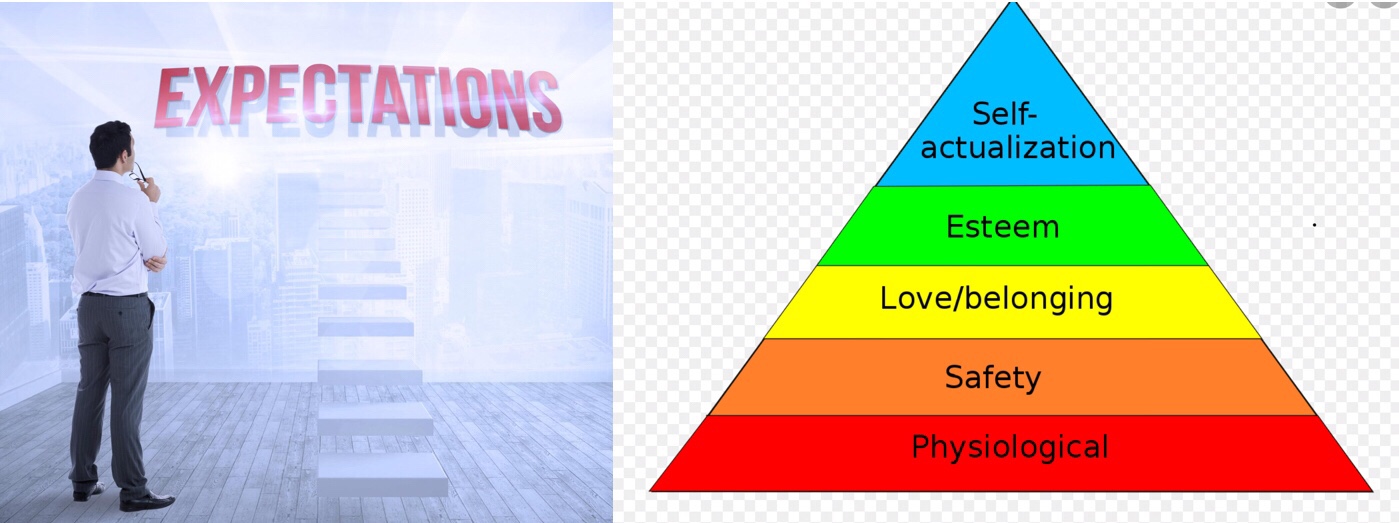
Every team needs energy to function and the energy bandits know this. Their need for energy is so high they can think of nothing else. If we think of this in terms of Maslow’s Hierarchy of Needs, we realize that energy is a first level, fundamental need. Unless this need is fulfilled and the energy bandit knows that their access to the energy in the future will not be impeded, the energy bandit will continue to suck the energy out of the team. A leader has a choice. Either remove the bandit from the environment or make sure they can have their energy needs met. Anything less will just kick the can down the road a bit and we’ll be faced with the same problem in the future. Solving the problem requires making some tough decisions and saying some very open and honest things. These difficult conversations are always about restoring proper energy flow through the team.
The Epic Crises we face as leaders can all be resolved. In my experience, their resolution is always about energy. Legacy Leadership is quite often an exercise in effect emotional energy management. At the first sign of energy depletion, Legacy Leaders must kick their energy management skills into high gear. Putting off these issues is your surest guarantee that a crisis will follow. Be observant and keep your finger on the pulse of the team. Maintain vigilance and look for the telltale signs of energy bandits. This is one of the most important things you must do as a Legacy Leader.
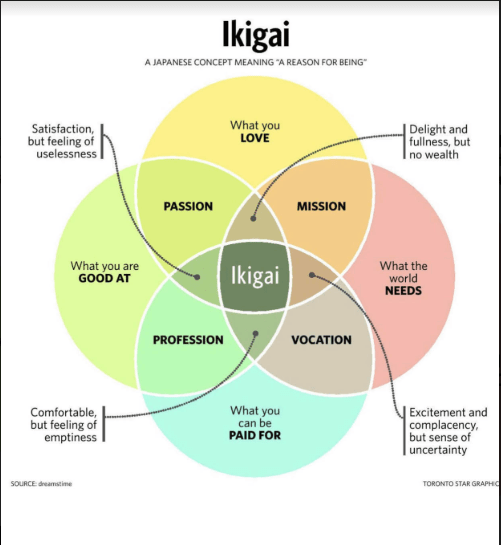
I recently received this graphic from a connection I have through LinkedIn. Thanks Tad Stephens for sending this to me. When I looked at this and put my business to the test, I found it very hard to keep our efforts trained on the center. Achieving Ikigai, having a real reason for being, takes incredible focus and discipline. Achieving that level of balance between abilities, love, world needs, and financial reward is not easy. There are times when I just want to do what I love, which is write. But it has become quite obvious to me that what I write is not always what the world needs (or more accurately wants) and I certainly have not accumulated great wealth from my writing. But, I do love to write and I’ve been told by numerous people that I’m pretty good at it.
Writing this Blog has been my attempt at finding out what the world needs. So far, some of my Blog posts have been viewed by several thousand people through LinkedIn. Other posts have been seen by just a few hundred. In looking at what people land on the most, I’ve seen that people have been most attracted to posts that focus on values and how those values effect what we do. The posts that have had the least following have been more personal thoughts about leaders who fall short on being values driven. I’m not sure, however, why an article about leadership and integrity, caring, and courage gets only 875 views in a week’s time while an article about leadership and caring got over 4,000 views in a week and now stands at 12,800 views in 4 weeks. You see, this is my dilemma, I’m not sure what the world is telling me it wants. And even more intriguing, what will the world pay for?
Because I think I’m pretty good at writing and I love doing it, I obviously have a passion for writing. I have written hundreds of articles over the last 20 years. Hundreds of these have been published. I have also co-authored 3 books and written one by myself. Two of the books have been distributed world wide and more than 10,000 copies are in circulation. For non-fiction books, that is a pretty big distribution. People have wanted to read these books but, alas, the world has not been willing to really pay for them. They’ve always been distributed to community groups as part of non-profit work my co-author, Kent Roberts, and I did for more than 15 years. We know people have loved the books because they have told us so. How do you translate what you are good at and what you love into a financial positive based on what the world truly needs.
The topic of my latest writings, and the name of this Blog, is Legacy Leadership. I know this is what the world needs but I’m not sure the world realizes it yet. There is some confusion about what Legacy Leadership is and perhaps that should be reiterated constantly so people will know what we mean when we say Legacy Leadership. Legacy Leadership is based on leaders wanting the Legacy of the Organization to be independent of the leader’s charisma or lack of it. Legacy Leaders want the purpose of the organization to prevail because of the values and principles upon which the organization operates not the personality of that leader. Many organizations succeed because there is a strong leader that can inspire people to do extraordinary things but when the leader is gone, all of the great initiatives put in place too often fall apart. I’ve seen this happen over and over. Legacy Leadership wants the organzation to be inspired by something associated with the organization itself and then no matter whether the leader is charismatic or somewhat uninspiring, the organization flourishes because it always operates based on values that are commonly held and applied at every level and in every segment of the organization. Great things naturally happen because the organization is set up to allow those great things to happen and the culture of the organization promotes the behaviors that make certain that those great things are honored and supported. People love being there, they are good at what they do, their passion shows. The organization has found what their world needs and that world is willing to pay for these products and services. In the case of our business, Culture By Choice, we have hit on all of these points and what we are now trying to do is expand the size of our world.
When I look at the graphic at the beginning of this post, I see that every Legacy Leader is trying to achieve Ikigai. Achieving a Legacy Culture means having a real purpose for the organization and then staying true to that purpose. Legacy Leaders want their organization to find that sweet spot where what we all love doing, intersects with what we are really good at doing, what the world really needs, and what the world is willing to pay for. When that intersection becomes the real purpose of the organization, I cannot imagine that organization failing. But, if finding that intersection was easy, everybody would find it. And then, it appears to me that this intersection is not like the intersection of State and Adams in Chicago. What the world wants and needs is not always the same. It can change. And what the world is willing to pay for is not stagnate either. These are moving targets. We must be agile in what we are doing. What the world wanted in 1970, or in 2010 for that matter, is not what the world wants in 2019. If an organization wants to be successful today, it must be able to adapt to what the world wants and is willing to pay for today, not what it wanted and was willing to pay for in 1970. And to achieve Ikigai, your organization must find these two new points on the map without losing their love and capacity to deliver a service or product. To continuously remain in a state of Ikigai, an organization must be agile yet rooted in stedfast vlaues and principles. That is the true challenge for every organization.
Sometimes we assume that people around us know what we expect. That can lead to disappointment. The expectations game is a tightrope act at 300 feet and no net. To succeed in this game it is best to be well prepared. And, the best preparation is to make sure everyone knows exactly what you expect. As soon as the expectations dialogue begins, we can start to determine how realistic our expectations are. So now we have two critical rules for this game; everyone knows what is expected and those expectations are realistic.
Those two rules, knowing and being realistic, are not the only rules. The third rule is understanding and the fourth rule is agreement. Your team can know what you expect and feel those expectations are realistic but if they don’t understand how to meet those expectations or if they don’t agree to meet them, disappointment is sure to follow. Wow, this is getting complicated. There are four rules for having expectations? Actually, there are more.
Beyond knowing, reality checking, understanding, and agreeing, there is commitment and capacity. Team members might know and agree with an expectation, fully understand what to do, feel it’s realistic, but also feel that it’s a lower priority or not believe that they have all the resources needed for success. Preparing for success is hard work. And having unclear expectations does not help in that preparation. There might be more rules for having expectations but let’s stick with these six.
If, as a Legacy Leader, I make sure my team is clear about every expectation, the work of my organization becomes more focused and more manageable. This clarity of expectations is based on the six rules: 1) knowing, 2) reality checking, 3) understanding, 4) agreeing, 5) commitment, and 6) capacity. Never assume that any one of these rules has been met. Check these for every expectation. You’ll be amazed at how much more success you’ll experience when you use this approach. Assuming that each rule has been fulfilled is taking that tightrope walk without doing everything you can to prepare. There’s no net down below and falling will be catastrophic.
As a young leader I made plenty of assumed expectation mistakes. I thought I’d give 2 examples to show how harmful failing at the expectations game can be. My first example was from one of my very first jobs. I was a Science Teacher and a coach at a large suburban high school in the Chicago area. An opening occurred for the head baseball coach at another high school in our district. The athletic director wanted me for the job and we started making plans for the summer program. I expected to be approved for the position, so I started making arrangements for games and practices to start in 2 weeks after school was out for the summer. I was making phone calls and missed the start of the senior awards assembly and the seniors had voted me Coach of the year. I was conspicuously absent when they called my name. I never expected the honor but I did expect to be named the head baseball coach at the other high school. My failure to follow the 6 rules I now suggest caused a group of seniors to feel I had disrespected them and sent a message to the other school that I don’t always do what I’m required to do. It cost me that head coaching position and it hurt the feelings of a great bunch of young men.
The second example was from many years later, when I really knew better but my desire to do something really innovative and exciting caused me to forget the lessons that taught me those 6 rules. This example is from my years as the County Superintendent of Schools in Michigan. I heard about a great way to save our district some money while continuing to provide the same level of benefits to our staff. I made the assumption that the staff would be happy to go with a new health insurance plan that cost us considerably less and gave them the same coverage with less out of pocket expenses. There were a few changes in how claims were filed but I figured no one would care when it meant the same coverage at less cost. Boy was I wrong. Without thinking, I had violated at least 4 of my rules and most likely all 6! The members of the professional association filed a grievance and demanded we go back to our old insurance. It didn’t make any difference if I was right or wrong. The staff wasn’t buying in. They never felt like they knew what was happening, the didn’t agree, they didn’t understand, and they certainly weren’t committed to the decisions I made. The good news was, we could fix it, I could eat plenty of crow, and in time we could rebuild the relationship I had tarnished with my staff. If I’d only slowed down and followed my own rules, perhaps the staff would have accepted the change with open arms or maybe not. But had I followed my own rules, I wouldn’t have caused so much grief and we’d been in the same place any way.
In my career as a leader, this set of rules has been extremely valuable. When I followed them, my chances for success increased dramatically. If I didn’t follow them, that’s when I faced my biggest failures. Here’s those rules again: 1) knowing, 2) reality checking, 3) understanding, 4) agreeing, 5) commitment, and 6) capacity. Check for each of these when you expect to achieve a certain outcome. Believe me, they help.
Every leader faces a variety of issues with their people. Some of these issues are small and rather insignificant while others can disrupt the work of the organization. If a team member is physically ill, most leaders want them to take the time they need to get well. But, when mental illness crops up, too many leaders either ignore the problem or worse, some will tell their team member to buck it up, get over it, or leave those problems at home. Why is this the case? Why do so many managers of people understand the need to take care of physical illness but take a much different approach to mental illness.
Today’s desire to ignore mental illness has its roots humanity’s past. At times mental illness was thought to be devil possession. At other times it was thought to be an imbalance in the “vital humours.” More recently it has been thought to be the result of trauma. Today we know that mental illness has many causes but the stigma associated with possession or living a bad life continue to keep most of us from seeing mental illness for what it really is; an illness.
As with our physical health, mental health is not a one dimensional phenomenon. There are many possibilities for mental health and each of these exist on a continuum from excellent health down to the most serious of problems. If we think of perfect mental health as being a 100 on a scale 1 to 100, all of us will find ourselves somewhere in between. None of us is perfect and, hopefully, none of us is at the 1 level either. So each of us, being imperfect, can begin to better empathize with someone on the mental health continuum down in the 30 or 40 range. If, as a leader, I am at an 80 for depression and one of myteam members is at a 40, I can realize, not being perfect myself, that my team member needs help. I, as the leader, have the responsibility to help my team members get the help they need, whether that’s for a physical or mental health issue.
When one member of my team is not up to speed, my whole team can suffer. This is true for both physical and mental ailments. As a Legacy Leader, I care about my people and I want to know when something is wrong. I will never know if there are any problems if I am not open to hearing everything that is happening to my people. Some leaders don’t want to hear all that messiness but if we aren’t aware of the health status of our team we run the very real risk of failure. Too often success can be stymied by people who just aren’t up for the challenge. One or two team members struggling with mental health issues can derail your efforts. Legacy Leaders understand that we all have issues and sometimes we can work through them but many times we can’t. When we can’t, as an organization with a Legacy Culture, we must make our space a safe space for anyone who needs help, to seek help. No stigmatization, just support and caring.
Our society has not been a good place for people with mental health issues and for that I say shame on us. We can change that one organization at a time. If leaders simply started caring about their people first, a huge corner would be turned. Without people, no organization can exist. The health of the people will determine the health of the organization. If you want a healthy organization, you must have healthy people. So, the most important task of any Legacy Leader is to take care of your people.
What’s more important if you want to be a Legacy Leader; your heart or your brain? This is not an easy question. Should you be governed by your feelings or your intellect? In the past, conventional wisdom said use logic and strategy; leave your emotions out of leadership. But, the work of Daniel Goleman and many others has helped us realize that trying to leave emotions out of it is darned near impossible. So, does this mean that our emotions should rule the leadership roost? Don’t jump to that conclusion too fast.
Perhaps the best way to understand the head and heart discussion is to put it into a context. Let’s think about this conundrum from a biological perspective. In a living organism, like a human being, the brain cannot function without the heart. And, although the heart can continue to beat without the brain for a little while, it would be hard to refer to the state of that being as being alive. The bottom line is simply, life requires both the brain and the heart.
We now know that our ability to make wise decisions does not just consider logic and reasoning. We now understand that our emotions can inform our logic and reasoning. Ignoring emotions discounts the impact our emotions have on our ability to drive towards important goals. If we rely purely on our brains, we can miss the reasons why people may or may not become fully engaged in the work needed to achieve important outcomes. When logic and reasoning are allowed to be influenced by our emotions, we have a greater probability that the energy needed to sustain efforts will be there.
Leaders get in trouble when they think they can separate the heart from the brain. It doesn’t work in a living organism and it doesn’t work in organizations either. Legacy Leaders quickly realize that an integration of head and heart is the most effective way to pursue important goals. Achieving critical outcomes requires well developed and logical strategies, supporting targeted tactics and heart felt motivations to power the efforts needed for success. Using our brain and our heart allows us to do so much more than either one would allow if we engage them separately.
To make real progress in any organization, Legacy Leaders use both their brains and their hearts. Creating a Legacy Culture means having a vision that inspires followers to work to achieve short term, intermediate, and long term goals. The short term goals can often be accomplished with strategies and tactics but the effort and work towards more intermediate and long range goals is more difficult to sustain without getting emotionally connected to those goals. This means believing in, loving, enjoying, and being connected to those goals. Logic and reasoning may be needed to make sure we do what needs to be done but without our emotions we’ll never be able to persevere for the duration.










 Cheryl Lohner
 drjbnewman
 Newman’s Legacy Leadership Blog